Antibodies are made by B lymphocytes. Each B lymphocyte makes just one type of antibody, which fits one particular antigen. Monoclonal antibodies are identical antibodies made by a single clone of cells, so they all bind to the same antigen and nothing else.
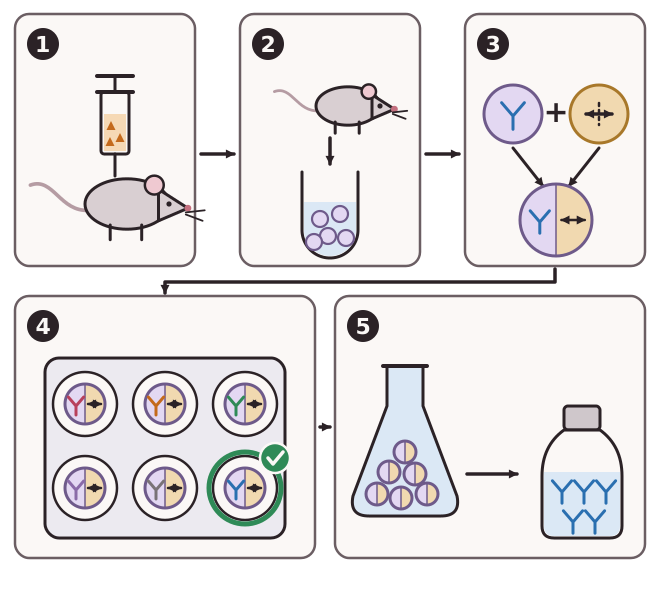
To make them, a mouse is injected with the antigen that the scientists want to target. The mouse's B lymphocytes respond by making the specific antibody, and the B lymphocytes are then collected from the mouse. A B lymphocyte does not live for long in a dish, so it is fused with a tumour cell called a myeloma cell. The fused cell is a hybridoma cell. A hybridoma makes the antibody like a B lymphocyte, and it can divide indefinitely like a tumour cell.
Many different hybridoma cells are made, so they are screened to find the one that produces the correct antibody. That hybridoma is cultured in large numbers to form a clone, and the monoclonal antibodies are collected and purified from the culture.