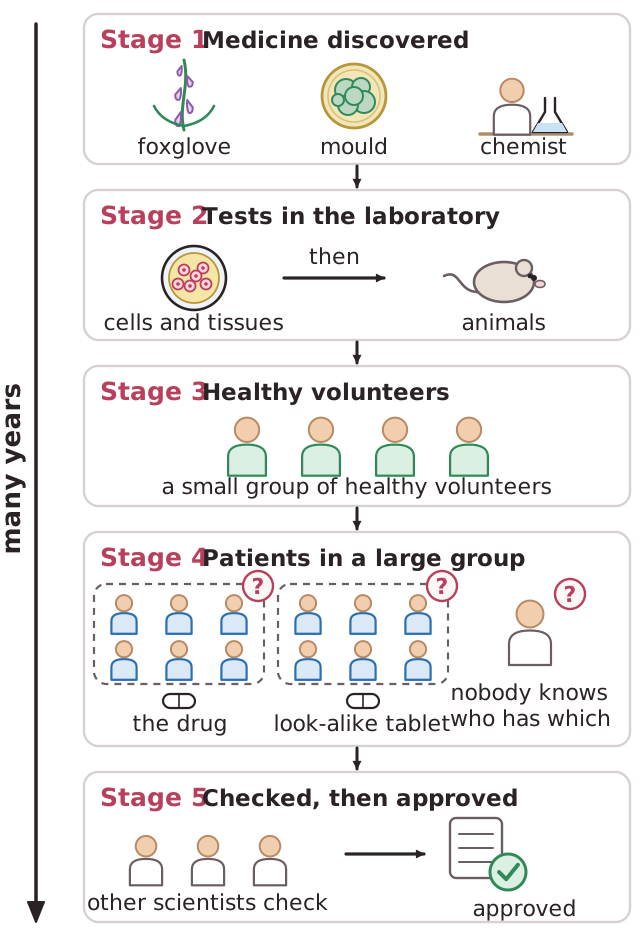
New medicines are discovered in several ways. Some come from plants, for example the heart drug digitalis from foxglove, and some come from microorganisms, for example penicillin from a mould. Others are designed and made by chemists. A potential new medicine cannot be used until it has passed a long series of tests, which can take many years.
The first stage is preclinical testing. The drug is tested on cells and tissues grown in the laboratory, and then on animals, to find out whether it works and whether it is toxic. Only if it seems safe is it tested on people in clinical trials.
In a clinical trial the drug is first given to a small group of healthy volunteers to test whether it is safe and to find the right dose. It is then given to patients to test how well it works. In the largest trials, some patients receive a placebo, which looks like the drug but has no active ingredient, so the effect of the drug can be compared with it. In a double-blind trial neither the patients nor the doctors know who has the drug, which stops bias in the results. The results are then checked by other scientists in peer review before the medicine can be approved.