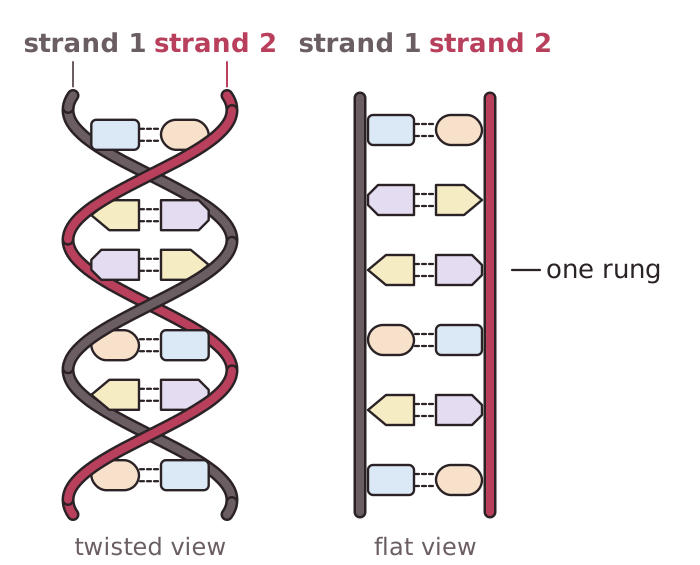
A DNA molecule is made of two strands that wind around each other. This twisted shape, a bit like a twisted ladder, is called a double helix.
The two strands are held together by pairs of bases in the middle. There are four bases: adenine (A), thymine (T), guanine (G) and cytosine (C). A base only pairs in one way: A pairs with T, and G pairs with C. This is called complementary base pairing.
Because of this rule, if you know the bases on one strand you can work out the bases on the other strand. A strand reading A A G is matched by a strand reading T T C.