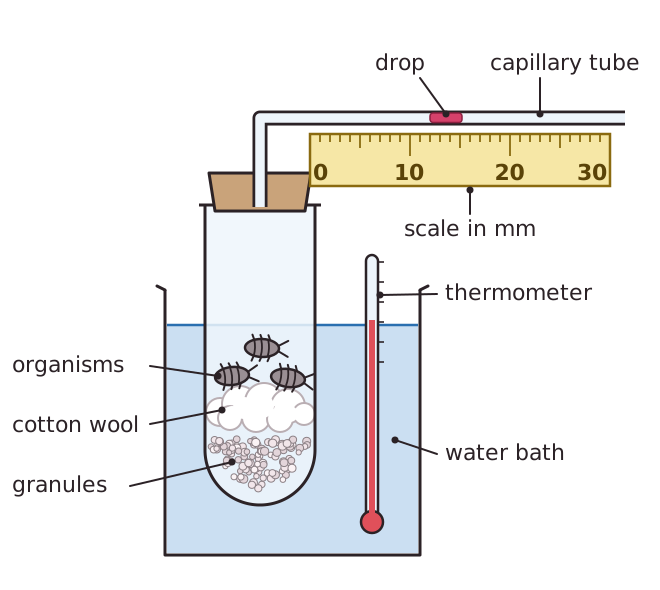
A simple respirometer measures the rate of respiration of small living organisms such as woodlice or germinating peas. The organisms sit in a tube above a layer of soda lime, separated from it by cotton wool. A capillary tube containing a drop of coloured liquid is joined to the top of the tube.
The organisms use up oxygen and make carbon dioxide. The soda lime absorbs the carbon dioxide, so the volume of gas in the tube falls and the coloured liquid moves towards the organisms. The distance the liquid moves in a set time shows the rate of oxygen consumption. For example, 24 mm in 4 minutes gives a rate of 24 ÷ 4 = 6 mm per minute.
To investigate temperature, the tube is placed in a water bath at different temperatures, such as 10, 20, 30 and 40 °C. Temperature is the independent variable and the distance moved is the dependent variable. Keep the same mass of organisms, the same time and the same apparatus, and repeat to calculate a mean. As the temperature rises the rate of respiration increases, because enzymes work faster, up to the optimum temperature. Above this the enzymes become denatured and the rate falls.
Safety and ethics: soda lime is an irritant, so wear eye protection and do not touch it. Handle the organisms gently, do not leave them in the warm tube for longer than needed, and return them to where they were found afterwards.