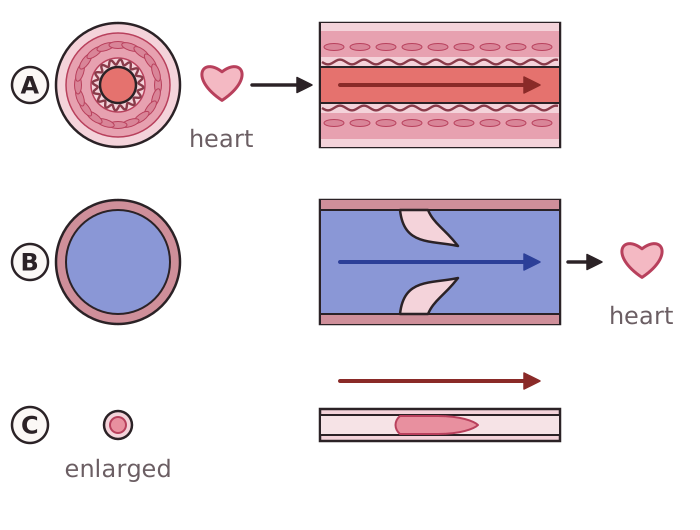
There are three types of blood vessel, and each has a structure that suits its job. Arteries carry blood away from the heart. The blood is at high pressure, so artery walls are thick and contain muscle and elastic fibres. The elastic fibres let the wall stretch as blood surges through and then recoil, which helps to keep the blood moving. The lumen, the space inside, is narrow.
Veins carry blood towards the heart. The blood is at low pressure, so vein walls are thinner than artery walls and the lumen is wide, which lets blood flow with little resistance. Veins contain valves. These stop the blood flowing backwards, so it can only move towards the heart. Without valves there would be backflow, and blood could pool in the legs.
Capillaries are tiny vessels that run between the cells of the body and join arteries to veins. Their walls are only one cell thick, so the diffusion distance is very short. They are so narrow that red blood cells pass through in single file, and they form a huge network with a large surface area. Oxygen, glucose and other substances diffuse out of the blood into the cells, and carbon dioxide and waste diffuse into the blood.