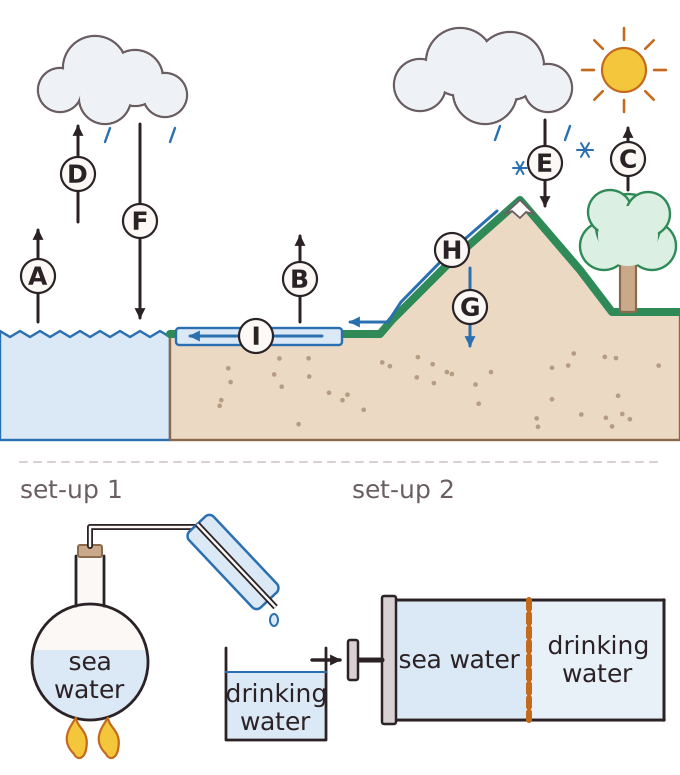
The water cycle moves water between the sea, the air, the land and living things. Energy from the Sun causes evaporation, which turns liquid water from seas, rivers and lakes into water vapour. Plants also lose water vapour from their leaves by transpiration, using water taken up by their roots.
The water vapour rises and cools. Condensation turns it into tiny droplets of liquid water that form clouds. The water falls as precipitation, such as rain, snow and hail. Some soaks into the soil and some flows over the land as run-off into rivers and the sea. The cycle matters because all organisms need fresh water, for example for photosynthesis, to transport substances and to keep cells working.
Water that is safe to drink is called potable water. In the UK it comes from rivers, reservoirs and groundwater, and is filtered and sterilised. In areas of drought there may not be enough fresh water, so potable water can be made from sea water by desalination, which removes the salt. This can be done by distillation, in which sea water is boiled and the steam condensed, or by reverse osmosis, which forces sea water through a membrane that holds back the salt. Both methods use a lot of energy, so they are expensive.