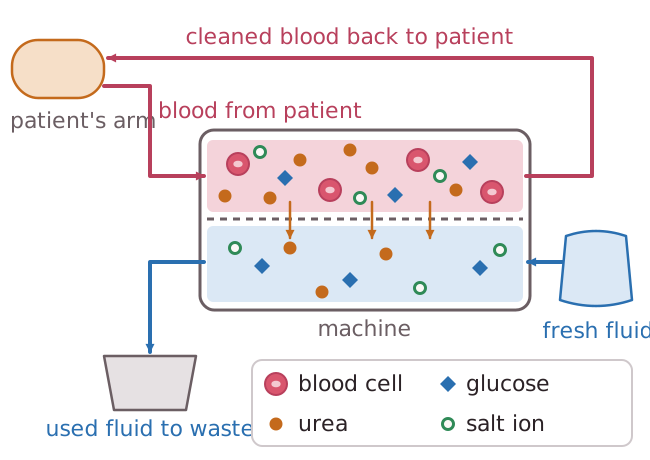
If the kidneys fail, urea and excess ions build up in the blood and the water content can no longer be controlled. This is life-threatening. There are two main treatments: kidney dialysis and a kidney transplant from a donor.
In dialysis, the patient's blood flows through a machine, separated from dialysis fluid by a partially permeable membrane. The dialysis fluid contains glucose and ions at the same concentration as healthy blood, but no urea. So urea moves out of the blood into the fluid by diffusion, while glucose and useful ions stay in the blood because there is no concentration difference. Fresh fluid keeps flowing past, which maintains a steep concentration gradient. A session takes several hours and is needed about three times a week, so it disrupts the patient's life.
A kidney transplant gives the patient a healthy kidney from a donor. One kidney is enough to do the whole job. It is a long-term cure, but donor kidneys are in short supply. The new kidney has different antigens on its cells, so the patient's immune system may attack it, which is called rejection. To reduce this, the donor is matched as closely as possible to the patient and the patient takes immunosuppressant drugs for the rest of their life. These drugs make infections more likely.