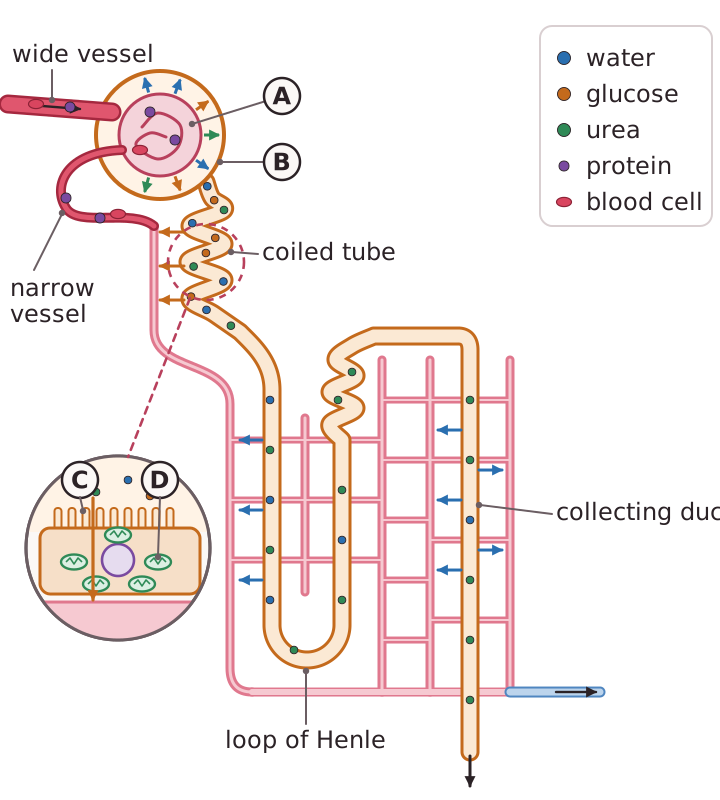
Each kidney contains about a million tiny filtering units called nephrons. A nephron starts with a tight ball of capillaries, the glomerulus, sitting inside a cup-shaped structure, the Bowman's capsule. Blood arrives in the glomerulus through a wide vessel and leaves through a narrower one. This narrow exit builds up a high pressure inside the capillaries.
The high pressure forces small molecules out of the blood and into the capsule. This is ultrafiltration. Water, glucose, urea and ions all pass through the capillary wall and the capsule lining. Large molecules such as proteins, and blood cells, are too big to get through, so they stay in the blood.
The filtered liquid then flows along a coiled tube. Here selective reabsorption takes place. All of the glucose is taken back into the blood by active transport, because the glucose concentration in the tube is no higher than in the blood, so diffusion alone could not move it all. Active transport needs energy, so the cells lining the first part of the tube have many mitochondria and microvilli to give a large surface area. Water is reabsorbed by osmosis along the tubule and the collecting duct.
What is left, mostly water, urea and excess ions, is urine. It flows out of the kidney to the bladder.