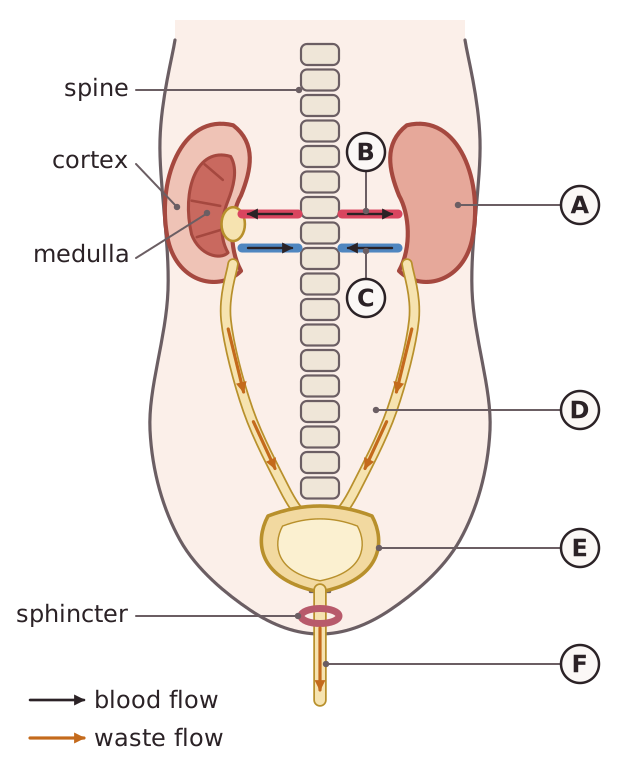
The urinary system removes waste from the blood and gets rid of it as urine. Its main organs are the two kidneys, which sit at the back of the abdomen, one on each side of the spine. The kidneys filter the blood and make urine. Each kidney has an outer layer called the cortex and an inner layer called the medulla.
Blood reaches each kidney in the renal artery. This blood carries urea, a waste made in the liver when excess amino acids are broken down. After the kidney has filtered the blood, it leaves in the renal vein. Blood in the renal vein contains much less urea than blood in the renal artery.
The urine that the kidney makes drains into a narrow tube called the ureter. There is one ureter for each kidney, and each one carries urine down to the bladder. The bladder is a muscular bag with a wall that stretches as it fills, so it can store urine until it is convenient to release it.
Urine leaves the bladder through a single tube called the urethra, which opens to the outside of the body. A ring of muscle called a sphincter keeps the urethra closed. When the person is ready to urinate, the sphincter relaxes and the bladder wall squeezes the urine out.