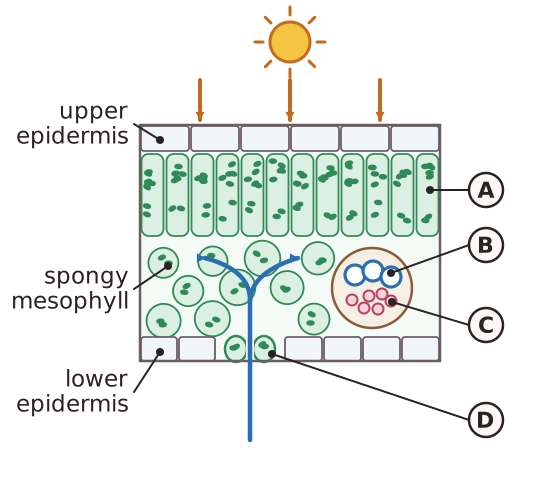
A leaf is a plant organ, and like any organ it is made of several tissues working together. Each tissue has a structure that suits its job.
The epidermis is a thin, transparent layer of cells covering the top and bottom of the leaf. It protects the leaf, and light passes straight through it to the cells below. The lower epidermis contains small pores called stomata. Each stoma is surrounded by two guard cells, which swell and shrink to open and close the pore. This controls gas exchange and water loss.
Just under the upper epidermis is the palisade mesophyll. Its cells are tall and packed closely together, and they contain lots of chloroplasts. This means they absorb a lot of light for photosynthesis. Below this is the spongy mesophyll. Its cells are rounder, with large air spaces between them, so carbon dioxide can diffuse through the leaf and reach the cells that need it.
Xylem and phloem are the transport tissues, found together in the veins of the leaf. Xylem carries water and mineral ions. Phloem carries dissolved sugars. Meristem tissue is found at the growing tips of shoots and roots. Its cells can divide and become specialised, which is how the plant grows.