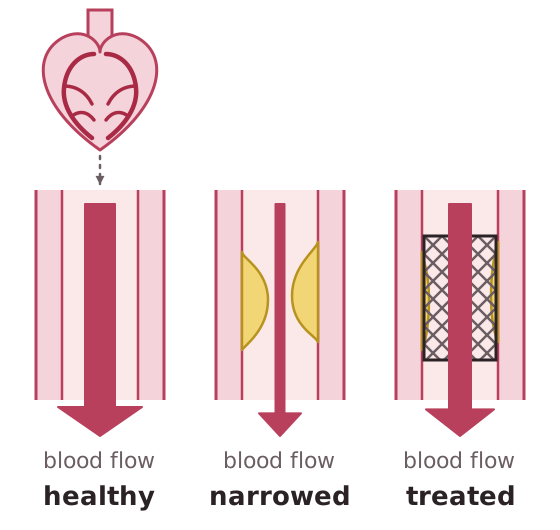
Coronary heart disease is a non-communicable disease, which means it cannot be passed from one person to another. Layers of fatty material build up inside the coronary arteries and make them narrower. This reduces the flow of blood to the heart muscle, so the muscle gets less oxygen and may not be able to work properly.
There are several treatments. A stent is a tube placed inside a coronary artery to keep it open. Stents work quickly and recovery is fast, but there is a risk of a blood clot forming or the artery narrowing again. Statins are drugs that reduce the level of cholesterol in the blood, which slows down the rate at which fatty material is deposited. They must be taken for a long time and can cause side effects.
Heart valves can become faulty. A valve may not open fully, or it may develop a leak. Either way, blood flow is less efficient. A faulty valve can be replaced by a biological valve (from an animal or a donor) or a mechanical valve. A mechanical valve lasts a long time but the patient usually has to take drugs to prevent blood clots.
In heart failure, a donor heart, or a heart and lungs, can be transplanted. A transplant can give a person many extra years of life, but donors are in short supply, the operation is major surgery, and the body's immune system may reject the new organ, so drugs are needed for life. Artificial hearts are used occasionally to keep a patient alive while they wait for a transplant, or to let the heart rest and recover.