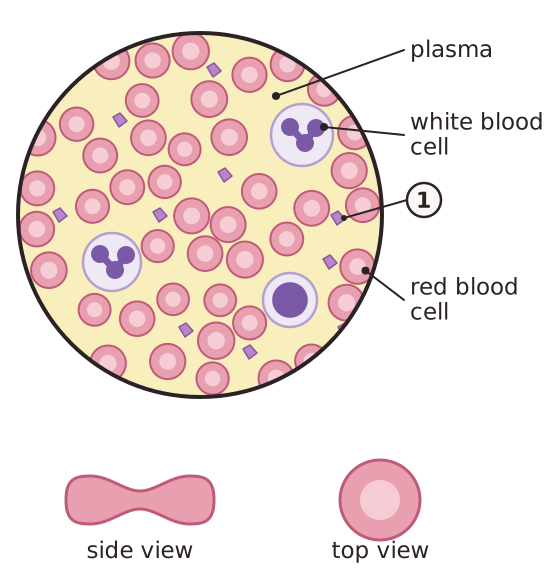
Blood is a tissue made of plasma, in which red blood cells, white blood cells and platelets are suspended. Plasma is the pale yellow liquid part. It carries carbon dioxide from the organs to the lungs, urea from the liver to the kidneys, digested food molecules from the small intestine to the cells, and hormones. It also carries heat around the body.
Red blood cells carry oxygen from the lungs to the cells. They contain the red pigment haemoglobin, which binds to oxygen. They are shaped like biconcave discs, which gives a large surface area for taking in oxygen. They have no nucleus, so there is more room for haemoglobin.
White blood cells defend the body against pathogens. Some, called phagocytes, engulf and digest pathogens. Others, called lymphocytes, produce antibodies. White blood cells have a nucleus and are larger than red blood cells. Platelets are small fragments of cells with no nucleus. They help the blood to clot at a wound, which stops blood loss and stops microbes entering.
When blood is viewed under a microscope, the red blood cells are the most numerous and look like pink discs with a paler centre. White blood cells are fewer and each one has a stained nucleus. Platelets are tiny fragments.