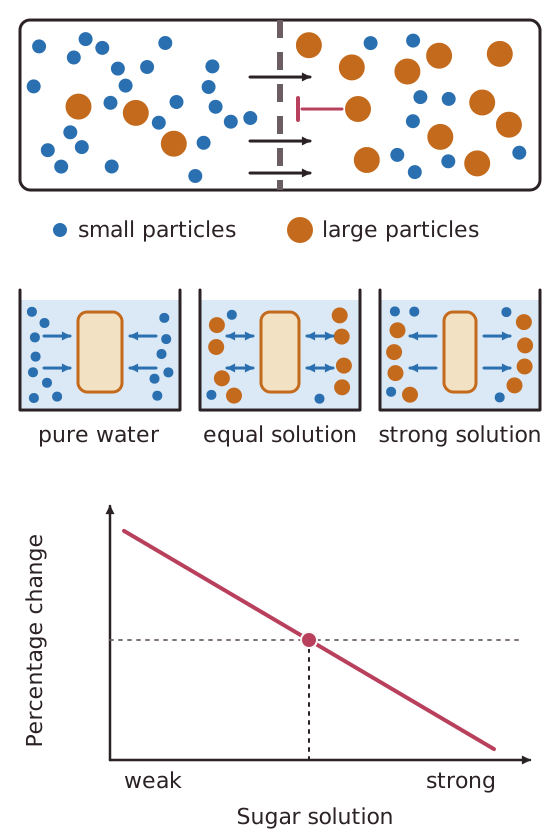
Osmosis is the diffusion of water from a dilute solution to a concentrated solution through a partially permeable membrane. A partially permeable membrane lets small molecules such as water pass through but not larger molecules such as sugar. Water moves because there is a higher concentration of water in the dilute solution than in the concentrated one.
Plant tissue placed in a solution gains or loses water by osmosis. If the solution is more dilute than the cell contents, water enters the tissue and its mass increases. If the solution is more concentrated than the cell contents, water leaves the tissue and its mass decreases. If the two are equal there is no overall change in mass.
Required practical 3: investigate the effect of different concentrations of salt or sugar solutions on the mass of plant tissue, for example potato cylinders. Cut cylinders of the same size and dry them, then find the mass of each. Place each one in a different concentration of solution for the same time, for example 20 minutes, then remove it, dry it and find its mass again. The independent variable is the concentration of the solution, and the dependent variable is the change in mass. Control the temperature, the volume of solution, the time, and the size of the tissue.
To compare results fairly, calculate the percentage change in mass: percentage change = (change in mass ÷ starting mass) × 100. A gain is positive and a loss is negative. For example, a cylinder that goes from 2.0 g to 2.3 g has gained 0.3 g, which is a 15% gain. Plot percentage change against concentration. Where the line crosses zero, the solution has the same concentration as the tissue.