 BRAINCAKE
The Bohr Effect
The Bohr effect is the decrease in the affinity of haemoglobin for oxygen when the partial pressure of carbon dioxide (pCO2) is high. On a graph, a higher pCO2 shifts the oxygen dissociation curve to the right.
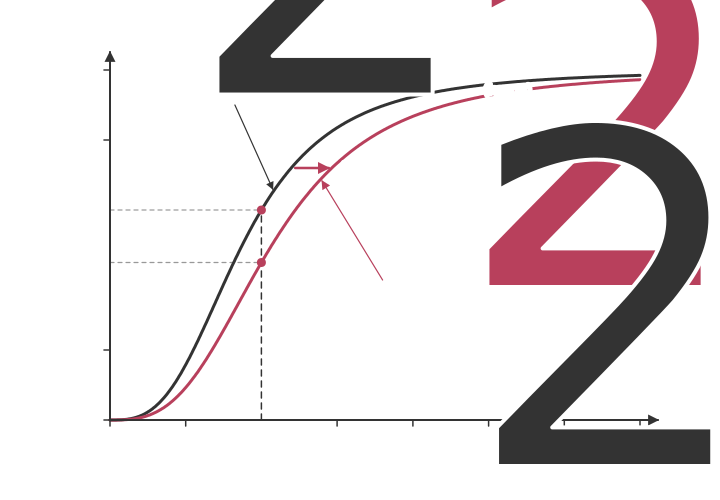
How it happens: in respiring tissues, cells produce carbon dioxide. CO2 diffuses into red blood cells, where the enzyme carbonic anhydrase converts it to carbonic acid, which dissociates into hydrogen ions (H+) and hydrogencarbonate ions. The H+ ions bind to haemoglobin, forming haemoglobinic acid. This changes the shape of haemoglobin, reducing its affinity for oxygen, so oxyhaemoglobin releases more oxygen.
Sign in free to see the rest of this lesson, the R.E.C.I.P.E. recall steps and the quiz
BrainCake is free. Make an account in seconds and pick up where this page stops.
Key terms in this lesson
- partial pressure
- The pressure that a particular gas in a mixture would exert if it alone occupied the whole volume.
More in Transport in Animals
- Haemoglobin
- Oxygen Loading and Unloading
- The Oxygen Dissociation Curve
- Partial Pressure of Oxygen
- Fetal Haemoglobin
- Transport of Carbon Dioxide
- Carbonic Anhydrase
- Haemoglobinic Acid
All 32 lessons in Transport in Animals · All OCR AS-level Biology topics