Extrinsic proteins are also known as peripheral membrane proteinsThey are attached to the surface of either the inner or outer layer of the phospholipid membrane.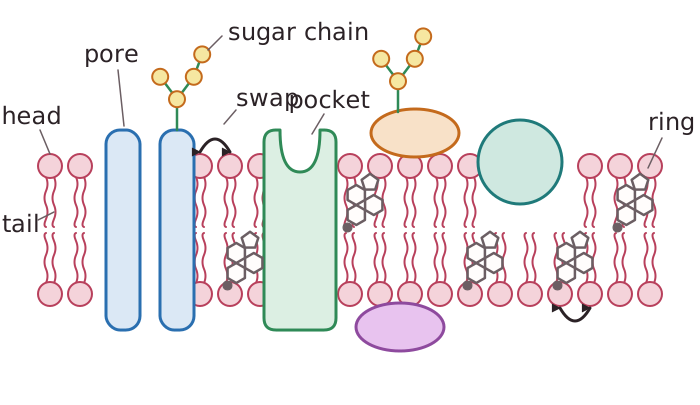 They may be attached temporarily to the membrane or permanently integrated into the membrane.These proteins may be anchored to the bilayer by hydrophobic interactions between the bilayer and exposed nonpolar residues at the surface of the protein.Extrinsic proteins may have a role in cell signaling and may act as cell surface receptors for polypeptide hormones or may be enzymes involved in digestion or other metabolic processes.Extrinsic proteins may interact with other proteins in the lipid bilayer or directly with the lipid bilayer.Some proteins, such as G-proteins and certain protein kinases, interact with transmembrane proteins and the lipid bilayer simultaneously.