 BRAINCAKE
Ribosomes
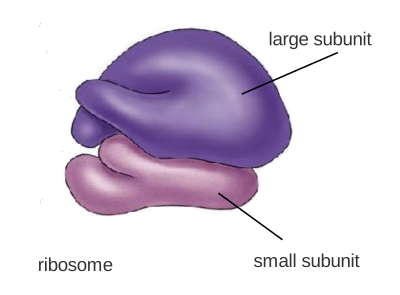
Ribosomes are the site of protein synthesis. They are either free in the cytoplasm or attached to the rough endoplasmic reticulum in eukaryotes.
They are made in the nucleolus from ribosomal RNA (rRNA) and protein.
Sign in free to see the rest of this lesson, the R.E.C.I.P.E. recall steps and the quiz
BrainCake is free. Make an account in seconds and pick up where this page stops.
Key terms in this lesson
- nucleolus
- A spherical structure within the nucleus where ribosomal RNA is made and combined with protein to form ribosomes.
- mitochondrion
- An organelle with a double membrane, the inner one folded into cristae, that is the site of aerobic respiration and ATP production.
- eukaryotic cell
- A cell with a nucleus and membrane-bound organelles, found in animals, plants, fungi and protoctists.
More in Cell Structure
- Cell Movement
- Centrioles
- Cilia and Flagella
- Smooth Endoplasmic Reticulum
- Rough Endoplasmic Reticulum
- Golgi Apparatus
- Plant Cells
- Cellulose Cell Wall
All 26 lessons in Cell Structure · All OCR AS-level Biology topics