Movement of cells is through actin fibres in the cytoskeleton.The filament lengths can be changed in one direction by the addition of subunits in the required direction.This leads to the cell membrane being pushed out and the flow of cytoplasm and the cell contents in one direction.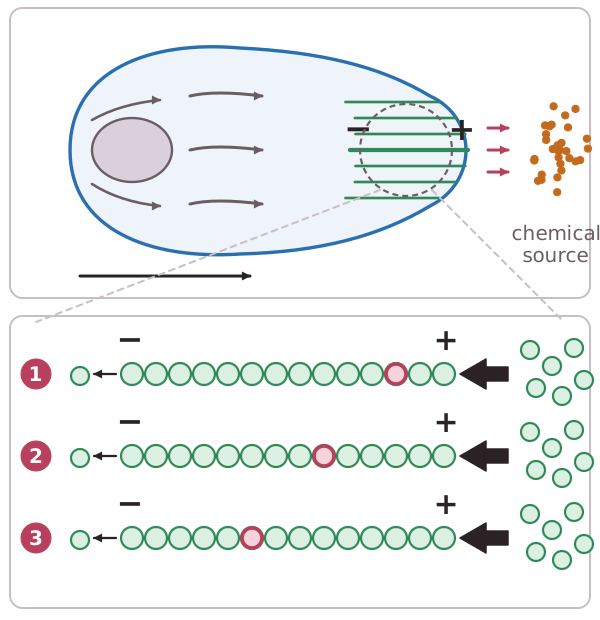 The cell changes shape and moves in the direction of elongation of the actin fibres. This mechanism is used for neutrophils movement towards a substance(chemotaxis) and is also important in phagocytosis.The subunits have to change shape before they are added to either end of the filament, but they can be added faster to the plus or leading end than to the minus or lagging end.The concentration of subunits in the cytoplasm determines whether or not subunits are added or removed.Where there are different rates of addition at each end, the concentrations of subunits at each end will be different.Increasing the length of filaments in one direction leads to cells such as phagocytes moving in that direction.