The cardiac cycle is the sequence of events in one complete heartbeat. It has three stages. Both sides of the heart go through the stages at the same time.1. Cardiac diastole. The atria and ventricles are all relaxed. Blood flows from the veins into the atria. As the atria fill, their pressure rises above that in the ventricles, so the atrioventricular valves open and blood flows passively into the ventricles. The semilunar valves are closed, because pressure in the arteries is higher than in the ventricles.2. Atrial systole. The atria contract, pushing the remaining blood into the ventricles. The ventricles are relaxed.3. Ventricular systole. The ventricles contract, starting from the apex (the bottom of the heart). Pressure in the ventricles quickly rises above that in the atria, so the atrioventricular valves close, preventing backflow into the atria. When ventricular pressure rises above the pressure in the arteries, the semilunar valves open and blood is forced into the aorta and pulmonary artery.The ventricles then relax. When their pressure falls below that in the arteries, the semilunar valves close, preventing backflow into the ventricles, and the cycle starts again. The closing of the valves makes the heart sounds heard through a stethoscope.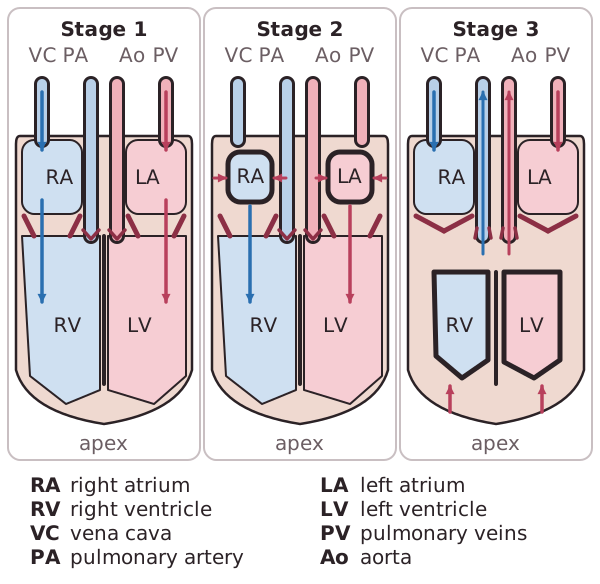 Worked example. At rest, one cardiac cycle takes about 0.8 s. The heart rate is:
heart rate = 60 s ÷ 0.8 s = 75 beats per minute
Worked example. At rest, one cardiac cycle takes about 0.8 s. The heart rate is: