 BRAINCAKE
Structure of the Human Heart
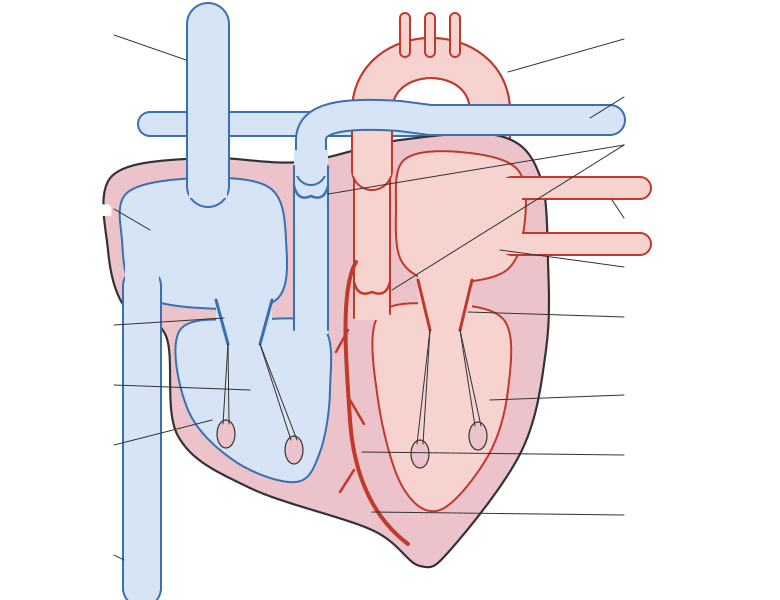
The human heart is a muscular pump made of cardiac muscle. It is divided into a right side and a left side by a wall called the septum, which stops oxygenated and deoxygenated blood from mixing. Each side has two chambers, so the heart has four chambers in total:
Atria (singular atrium). The two upper chambers receive blood from the veins. They have thin walls because they only need to pump blood a short distance, into the ventricles below.
Ventricles. The two lower chambers pump blood out of the heart into the arteries. They have thicker, more muscular walls. The left ventricle has the thickest wall, because it must pump blood at high pressure all around the body. The right ventricle only pumps blood to the nearby lungs, and a lower pressure there avoids damaging the delicate lung capillaries.
Sign in free to see the rest of this lesson, the R.E.C.I.P.E. recall steps and the quiz
BrainCake is free. Make an account in seconds and pick up where this page stops.
More in The Heart
- Blood Flow through the Heart
- Contraction of Cardiac Muscle
- The Cardiac Cycle
- Control of the Heartbeat
- Electrocardiograms
- Electrical and Pressure Changes in the Heart
All 7 lessons in The Heart · All Edexcel AS-level Biology topics