 BRAINCAKE
Fertilisation in Humans
In humans, sperm are deposited in the vagina and swim through the cervix and uterus into the oviduct, where fertilisation normally happens. The female gamete released at ovulation is a secondary oocyte, which has stopped at metaphase of meiosis II. It is surrounded by a jelly-like glycoprotein layer, the zona pellucida, and an outer layer of follicle cells.
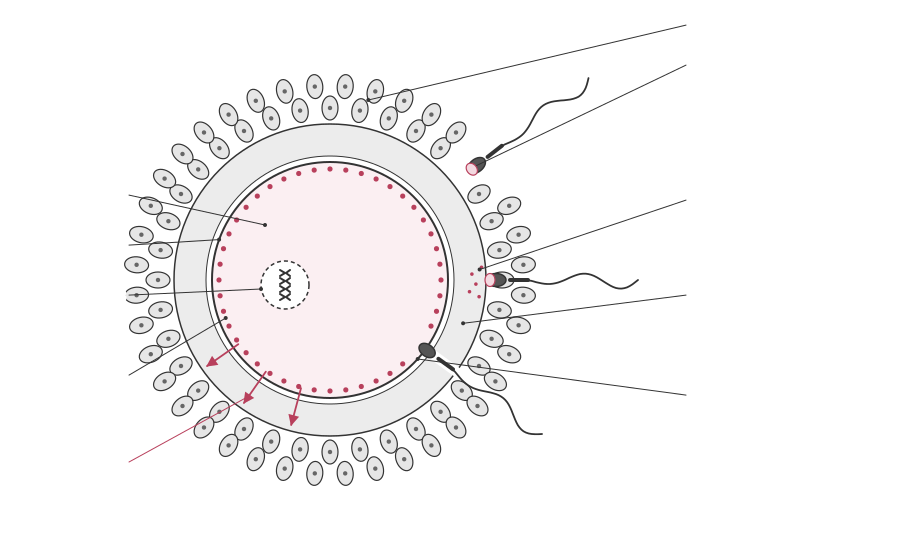
1. Acrosome reaction. The sperm pushes between the follicle cells. When its head binds to the zona pellucida, the acrosome (a vesicle in the sperm head) releases digestive enzymes (proteases). These digest a path through the zona pellucida.
Sign in free to see the rest of this lesson, the R.E.C.I.P.E. recall steps and the quiz
BrainCake is free. Make an account in seconds and pick up where this page stops.
Key terms in this lesson
- zona pellucida
- The thick, clear glycoprotein layer surrounding the cell surface membrane of a mammalian egg cell.
- acrosome
- A vesicle covering the front of a sperm head, containing digestive enzymes that help it penetrate the egg.
- polar body
- A small haploid cell produced alongside the egg during oogenesis, containing almost no cytoplasm and not developing into a gamete.
More in Meiosis and Sexual Reproduction
- Formation of Pollen
- Formation of Plant Egg Cells
- Pollination
- Internal Fertilisation
- External Fertilisation
- Fertilisation in Plants
- Embryo Development in Mammals
- Differentiation
All 28 lessons in Meiosis and Sexual Reproduction · All Edexcel AS-level Biology topics