 BRAINCAKE
Fertilisation in Plants
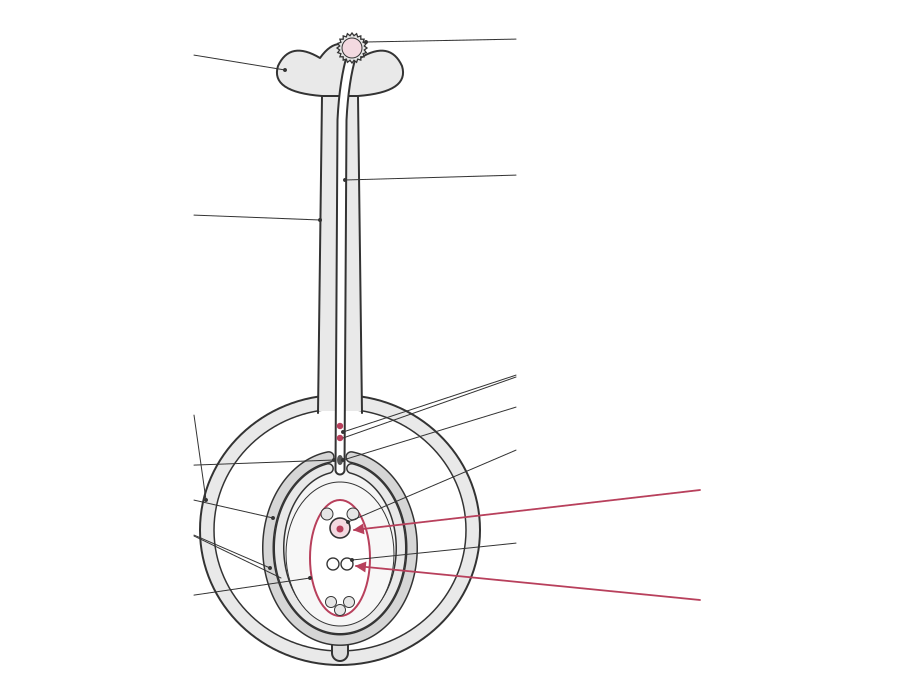
After pollination, a pollen grain on the stigma absorbs water and germinates. A pollen tube grows out through a pore in the pollen wall and down through the style towards the ovary. The tube secretes digestive (hydrolase) enzymes that break down the tissue of the style as it grows. It grows towards chemicals released by the ovule, a response called chemotropism.
The tube nucleus stays near the tip and controls growth of the tube. The generative nucleus divides by mitosis to form two male gamete nuclei, which follow behind it.
Sign in free to see the rest of this lesson, the R.E.C.I.P.E. recall steps and the quiz
BrainCake is free. Make an account in seconds and pick up where this page stops.
Key terms in this lesson
- generative nucleus
- The nucleus in a pollen grain that divides by mitosis to form the two male gamete nuclei used in fertilisation.
More in Meiosis and Sexual Reproduction
- Formation of Pollen
- Formation of Plant Egg Cells
- Pollination
- Internal Fertilisation
- External Fertilisation
- Fertilisation in Humans
- Embryo Development in Mammals
- Differentiation
All 28 lessons in Meiosis and Sexual Reproduction · All Edexcel AS-level Biology topics