 BRAINCAKE
Embryo Development in Mammals
After fertilisation in the oviduct, the zygote divides repeatedly by mitosis as it is moved towards the uterus by cilia and muscle contractions. These early divisions are called cleavage. The cells do not grow between divisions, so the embryo stays about the same size while its cells get smaller with each division: 1 cell → 2 → 4 → 8 → 16.
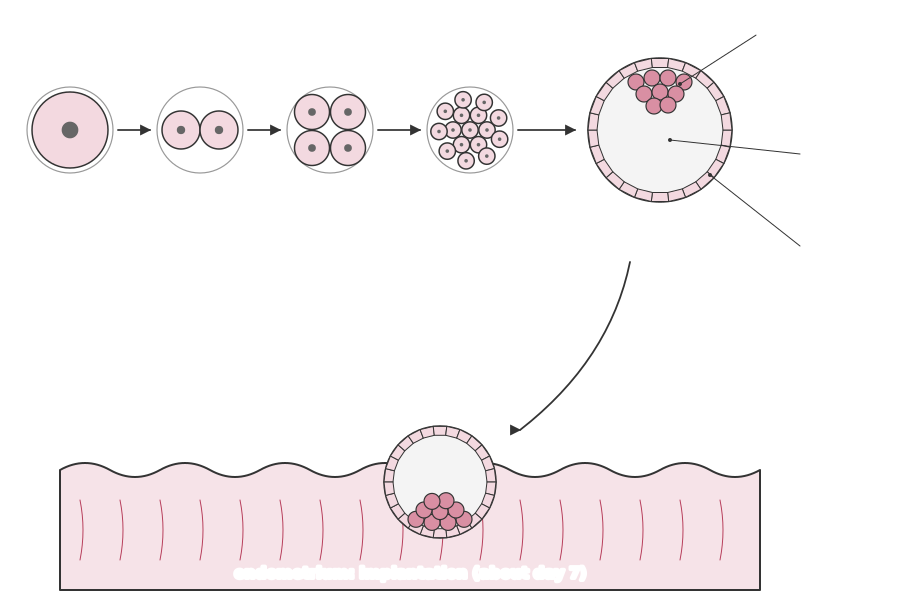
By about day 3 to 4, the embryo is a solid ball of about 16 cells called a morula. It enters the uterus.
Sign in free to see the rest of this lesson, the R.E.C.I.P.E. recall steps and the quiz
BrainCake is free. Make an account in seconds and pick up where this page stops.
Key terms in this lesson
- zygote
- The diploid cell formed by the fusion of a male and a female gamete at fertilisation.
More in Meiosis and Sexual Reproduction
- Formation of Pollen
- Formation of Plant Egg Cells
- Pollination
- Internal Fertilisation
- External Fertilisation
- Fertilisation in Humans
- Fertilisation in Plants
- Differentiation
All 28 lessons in Meiosis and Sexual Reproduction · All Edexcel AS-level Biology topics