In the gill lamellae, blood flows in the opposite direction to the water flowing over them. This arrangement is called a countercurrent exchange system.As water passes along a lamella it loses oxygen. At the same time, blood entering the lamella from the other end starts with very little oxygen and picks it up as it travels. The result is that, at every point along the lamella, the blood meets water that has a higher oxygen concentration than the blood itself:• blood that has just entered (lowest oxygen) meets water that is about to leave, which has lost some oxygen but still has more than the blood
• blood that is about to leave (highest oxygen) meets water that has just entered, which is richest in oxygen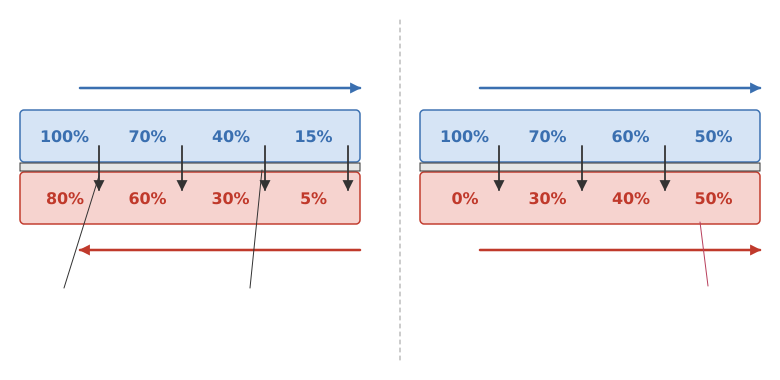
• blood that is about to leave (highest oxygen) meets water that has just entered, which is richest in oxygen