 BRAINCAKE
Stomata
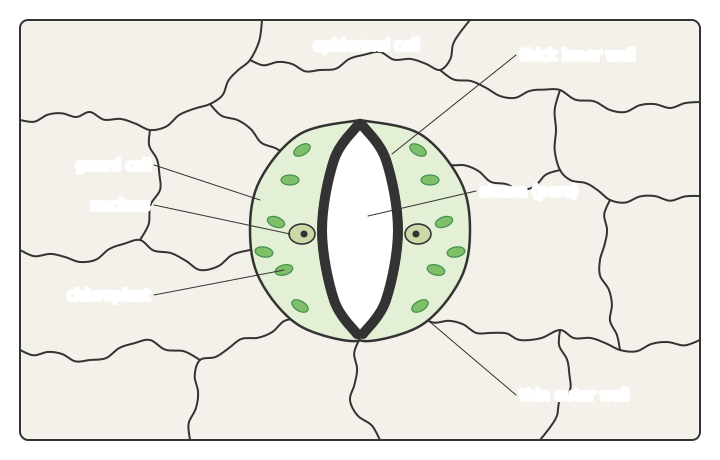
Stomata (singular: stoma) are small pores in the epidermis of leaves and young stems through which gases diffuse in and out. In most plants they are found mainly on the lower surface of the leaf, which is cooler and shaded, so less water is lost from them.
Each stoma is surrounded by a pair of guard cells. Guard cells are unusual epidermal cells:
• they are bean-shaped (kidney-shaped) in most plants
• they contain chloroplasts, unlike most other epidermal cells
• their cell walls are unevenly thickened: the inner wall next to the pore is thicker and less elastic than the outer wall
Sign in free to see the rest of this lesson, the R.E.C.I.P.E. recall steps and the quiz
BrainCake is free. Make an account in seconds and pick up where this page stops.
Key terms in this lesson
- transpiration
- The loss of water vapour from a plant's surface, mainly through the stomata of its leaves.
More in Gas Exchange
- Very Active Insects
- Gas Exchange in Fish
- Fish Gills
- Ventilating the Gills
- The Countercurrent Exchange System
- Gas Exchange in Plants
- Opening and Closing the Stomata
- Lenticels
All 23 lessons in Gas Exchange · All Edexcel AS-level Biology topics