Gas exchange in the lungs takes place across the walls of the alveoli. Each alveolus is surrounded by a dense network of blood capillaries.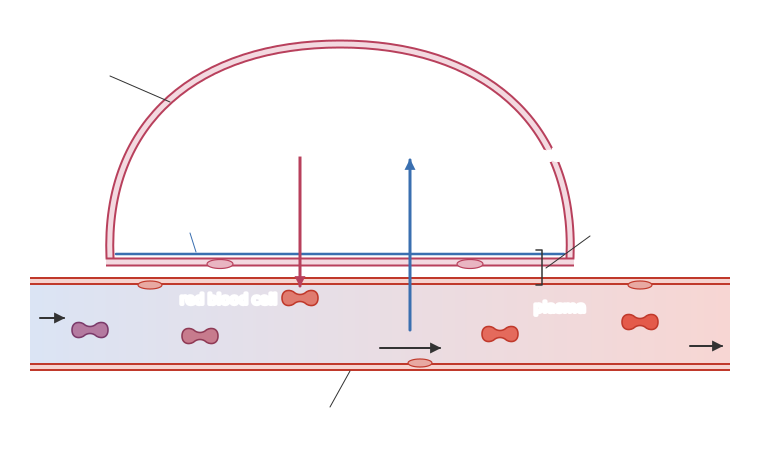
1. the thin layer of moisture lining the alveolus, where it dissolves;
2. the alveolar epithelium (one cell thick);
3. the capillary endothelium (one cell thick);
4. the plasma, into the red blood cells, where it binds to haemoglobin to form oxyhaemoglobin.Carbon dioxide diffuses in the opposite direction, from the blood into the alveoli. Blood arriving at the lungs has a high carbon dioxide concentration, produced by respiration in the tissues, while alveolar air has a low concentration. The carbon dioxide is then breathed out.Both movements are passive diffusion, down concentration gradients. The total diffusion distance, from air to blood, is very short, about 1 µm or less, because both walls are only one flattened cell thick.The gradients are maintained continuously:
• breathing replaces alveolar air with fresh air, keeping oxygen high and carbon dioxide low;
• blood flow carries oxygenated blood away to the pulmonary vein and brings more deoxygenated blood.When blood flow through the capillaries speeds up, for example during exercise, oxygen is removed faster, so the concentration gradient stays steep.