Stabilising selection is a type of natural selection that results in phenotypes around the mean being selected for and those phenotypes at the extremes being selected against.If the environment remains stable, the individuals with characteristics close to the mean (the most common characteristics) will be at a competitive advantage and will be more likely to outcompete the other individuals at the extremes. These individuals will survive, reproduce and pass on their advantageous alleles to the next generation.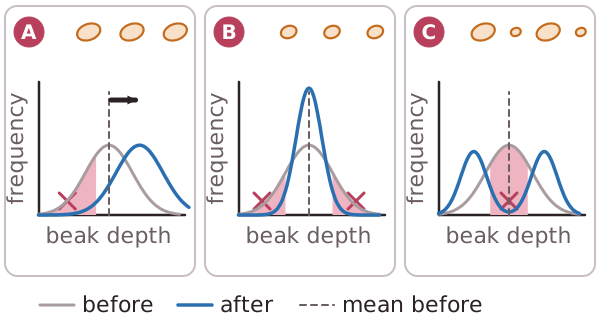 The individuals at the extremes are less favoured and are less likely to survive so their alleles are less likely to be passed on to the next generation and their allele frequency in the population will decrease.