The Human Immunodeficiency Virus (HIV) is an enveloped RNA retrovirus.Each virion contains the enzymes reverse transcriptase, protease and integrase and two copies of single-stranded RNA genome 9750 nucleotides long enclosed in a protein capsid. The capsid is surrounded by a lipid envelope which is of host-cell plasma membrane origin containing viral envelope proteins. The virus uses these attachment proteins (gp120) to gain entry into the host cell by binding to CD4 receptors on T-helper cells and fusing its outer envelope with the host cell plasma membrane.The capsid enters the host cell and is digested to release the viral RNA and the viral enzymes into the host cell.
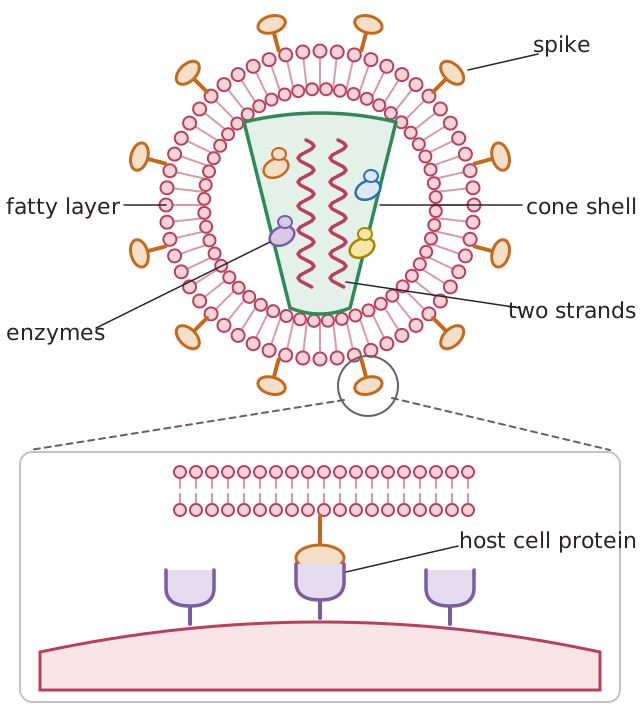
Structure of HIV Virus
Read the text
Read the text and highlight anything you think is important. When you go on, the text is hidden and you answer from memory.
Specification: AQA Biology (7401), AS-level, 3.2.4 Cell recognition and the immune system. Topic: Cell Recognition and the Immune System.
Key terms in this lesson
- nucleotide
- A molecule made of a pentose sugar, a phosphate group and a nitrogen-containing base.
- T-lymphocyte
- A type of white blood cell, matured in the thymus gland, responsible for the cell-mediated immune response.
- genome
- The complete set of genes possessed by an organism.
More in Cell Recognition and the Immune System
- Herd Immunity
- Vaccination Programme Failure
- Ethics
- MMR Vaccine Case Study
- Replication of HIV Virus
- AIDS
- The ELISA Test
- Antibiotics
All 30 lessons in Cell Recognition and the Immune System · All AQA AS-level Biology topics