When enough of a population have immunity to a disease the pathogen is unlikely to spread within the population because the population has herd immunity.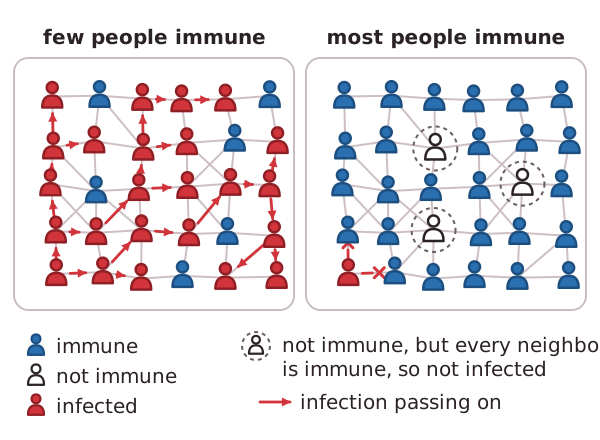 Vaccination of 80 - 95% of the population will achieve herd immunity. The percentage of the population needed to achieve herd immunity depends on the nature of the pathogen.For various reasons, it may not be possible to vaccinate 100% of the population.Some people may be too young, too old or have compromised immune systems.Because pathogens are spread from person to person through close contact the probability of a susceptible individual coming into close contact with an infected individual is significantly reduced if herd immunity is achieved.