 BRAINCAKE
Antibody Function
Antibodies work in various ways to stop pathogens from causing damage to cells.
Agglutination.
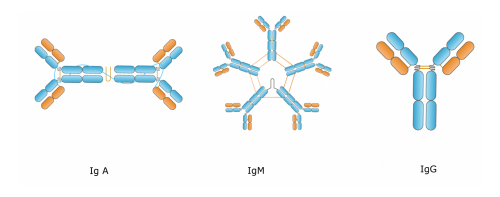
Antibodies bind to antigens on pathogens and cause the cells to clump together in one place so they are less spread out within the body.
Sign in free to see the rest of this lesson, the R.E.C.I.P.E. recall steps and the quiz
BrainCake is free. Make an account in seconds and pick up where this page stops.
Key terms in this lesson
- pathogen
- A microorganism, such as a virus, bacterium, fungus or protoctist, that causes disease.
- antigen
- A protein or glycoprotein, usually on a cell surface, that is recognised as foreign by the immune system and triggers an immune response.
- antibody
- A Y-shaped protein, made of four polypeptide chains with variable regions complementary to a specific antigen, produced by B plasma cells.
More in Cell Recognition and the Immune System
- Cytotoxic T-cells
- Humoral Immunity
- Primary and Secondary Immune Response
- Antibody Structure
- Monoclonal Antibodies
- Drug Delivery and Therapy
- Medical Diagnosis
- Pregnancy Testing
All 30 lessons in Cell Recognition and the Immune System · All AQA AS-level Biology topics