 BRAINCAKE
Antibody Structure
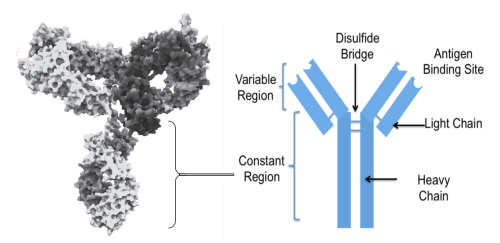
Antibodies are small, soluble Y-shaped proteins made up four polypeptide chains. They are called immunoglobulins (Ig) and there are various types. The most common is IgG.
There are a pair of shorter polypeptides known as light chains and a pair of longer polypeptide chains known as heavy chains.
The chains are linked together by disulfide bridges.
Sign in free to see the rest of this lesson, the R.E.C.I.P.E. recall steps and the quiz
BrainCake is free. Make an account in seconds and pick up where this page stops.
Key terms in this lesson
- disulfide bridge
- A strong covalent bond formed between two sulfhydryl (-SH) groups of cysteine residues in a polypeptide.
- pathogen
- A microorganism, such as a virus, bacterium, fungus or protoctist, that causes disease.
- antigen
- A protein or glycoprotein, usually on a cell surface, that is recognised as foreign by the immune system and triggers an immune response.
- B-lymphocyte
- A type of white blood cell, matured in the bone marrow, responsible for the humoral immune response and antibody production.
More in Cell Recognition and the Immune System
- Cell-Mediated Immunity
- Cytotoxic T-cells
- Humoral Immunity
- Primary and Secondary Immune Response
- Antibody Function
- Monoclonal Antibodies
- Drug Delivery and Therapy
- Medical Diagnosis
All 30 lessons in Cell Recognition and the Immune System · All AQA AS-level Biology topics