 BRAINCAKE
Starch
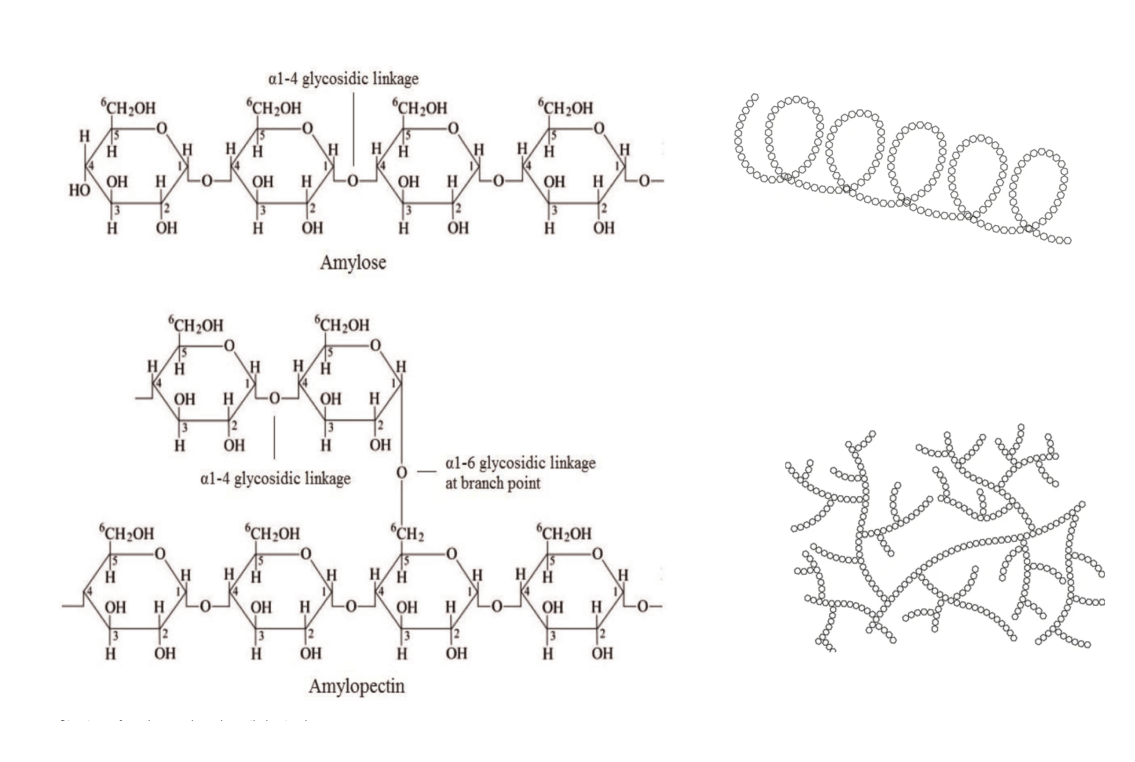
Starch is an energy storage polysaccharide found in plants. Starch grains occur in seeds and storage organs such as potato tubers.
Starch is made of chains of alpha glucose monosaccharides linked by glycosidic bonds.
Starch is made of amylose and amylopectin.
Sign in free to see the rest of this lesson, the R.E.C.I.P.E. recall steps and the quiz
BrainCake is free. Make an account in seconds and pick up where this page stops.
Key terms in this lesson
- hydrolysis
- The breaking of a covalent bond within a molecule using a water molecule.
- monosaccharide
- The monomer from which larger carbohydrates are made, a simple sugar such as glucose.
- glycosidic bond
- The covalent bond formed between two monosaccharides by a condensation reaction.
- polysaccharide
- A polymer formed from many monosaccharides joined together by glycosidic bonds.
- water potential
- The pressure created by water molecules, a measure of the tendency of water to move out of a solution; pure water has a water potential of zero and solutes make it more negative.
More in Biological Molecules
- Test for Reducing Sugars
- Disaccharides
- Test for Non-reducing Sugars
- Polysaccharides
- Test for Starch
- Glycogen
- Cellulose
- Roles of Lipids
All 29 lessons in Biological Molecules · All AQA AS-level Biology topics