Lipids are macromolecules that contain carbon, hydrogen and oxygen. They are insoluble in water but soluble in organic solvents such as ethanol.Cell membranes and membranes of organelles are made of phospholipids.Phospholipids are lipids that contain a charged phosphate group, so they have a polar, hydrophilic head and non-polar, hydrophobic fatty acid tails.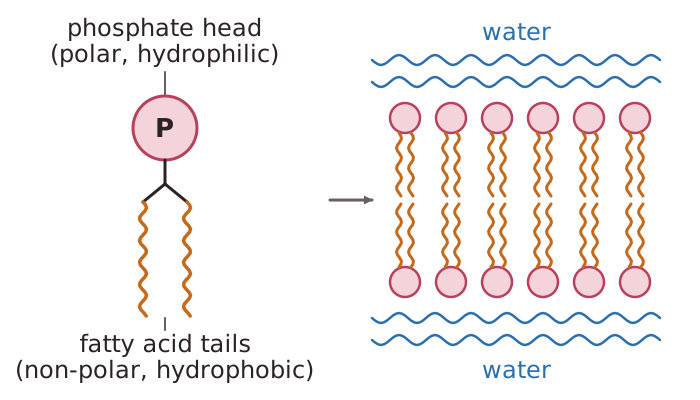 Lipids have other roles such as a source of energy, waterproofing, electrical and thermal insulation and the protection of vital organs such as the heart and kidneys.Lipids are metabolic source of water for organisms living in dry environments.