 BRAINCAKE
Measuring RQ with a Respirometer
A respirometer measures the rate of oxygen uptake by small organisms such as germinating seeds or woodlice. It can also be used to find the RQ.
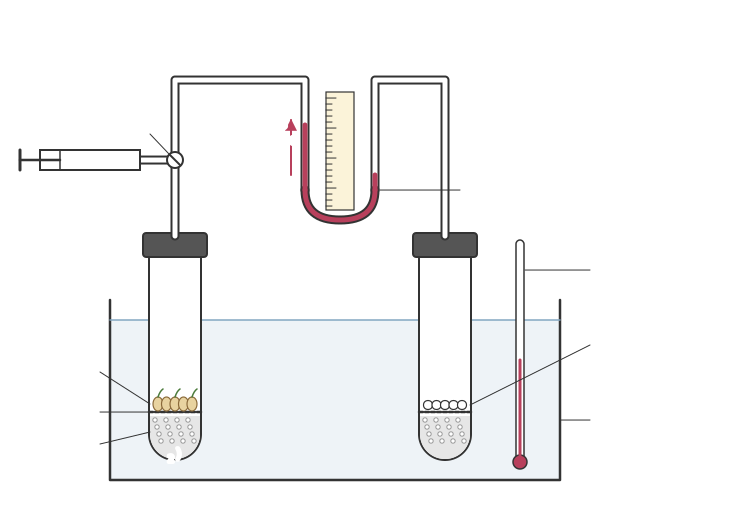
The organisms are placed in a tube on a gauze platform above soda lime (or potassium hydroxide solution), which absorbs carbon dioxide. A control tube contains glass beads of the same volume as the organisms. Both tubes are connected by a U-tube manometer containing coloured fluid, and are kept in a water bath at constant temperature, because gas volume changes with temperature and pressure. The control tube compensates for these changes.
Sign in free to see the rest of this lesson, the R.E.C.I.P.E. recall steps and the quiz
BrainCake is free. Make an account in seconds and pick up where this page stops.
Key terms in this lesson
- respiratory quotient
- The ratio of the volume of carbon dioxide produced to the volume of oxygen used in respiration over the same time.
More in Respiration
- Anaerobic Respiration - Plants and Microorganisms.
- Anaerobic Respiration - Mammals
- Respiratory Substrates
- Energy Values of Carbohydrates, Lipids and Proteins
- Respiration of Lipids
- Respiration of Proteins
- Respiratory Quotient
- Calculating RQ
All 19 lessons in Respiration · All OCR A-level Biology topics