 BRAINCAKE
Generator Potential
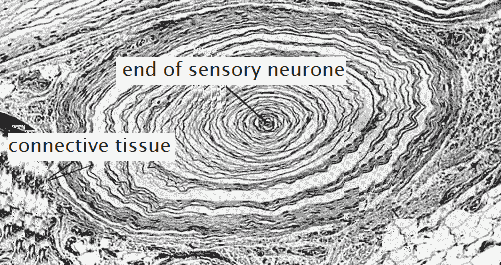
Normally, the sensory neurone is at its resting potential. The axon membrane is negative on the inside. When pressure is applied to the Pacinian corpuscle, the membrane of the neurone stretches and a stretch-mediated sodium ion channel changes shape and widens to allow the diffusion of sodium ions into the neurone.
Sign in free to see the rest of this lesson, the R.E.C.I.P.E. recall steps and the quiz
BrainCake is free. Make an account in seconds and pick up where this page stops.
Key terms in this lesson
- Neurone
- A specialised nerve cell adapted to transmit electrical impulses (nerve impulses) around the body.
- Action potential
- The temporary reversal of the electrical charge across an axon membrane, from about -70mV to +40mV, that occurs when a neurone is stimulated above threshold.
- Resting potential
- The difference in electrical charge across an axon membrane (about -70mV, inside negative relative to outside) when a neurone is not conducting an impulse.
- Pacinian corpuscle
- A mechanoreceptor found deep in the skin that detects mechanical pressure and generates a generator potential via stretch-mediated sodium channels.
More in Neuronal Communication
- Motor Neurones
- Myelinated Neurones
- Sensory Receptors
- Pacinian Corpuscles
- Resting Potential
- Depolarisation
- Repolarisation
- Hyperpolarisation
All 38 lessons in Neuronal Communication · All OCR A-level Biology topics