 BRAINCAKE
Adrenal Medulla
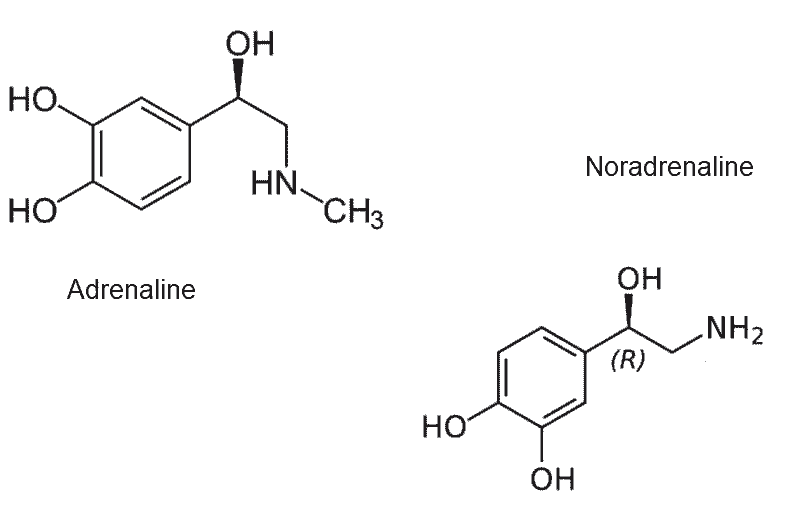
The adrenal medulla produces adrenaline and noradrenaline in response to stimulation by the sympathetic nervous system.
Adrenaline rapidly raises blood sugar levels by converting glycogen in the liver to glucose and increases the heart rate in order to increase blood flow to the brain and muscles.
Sign in free to see the rest of this lesson, the R.E.C.I.P.E. recall steps and the quiz
BrainCake is free. Make an account in seconds and pick up where this page stops.
Key terms in this lesson
- Neurotransmitter
- A chemical released from the presynaptic membrane at a synapse that diffuses across the synaptic cleft and binds to receptors on the postsynaptic membrane, triggering a response.
- Sympathetic nervous system
- The division of the autonomic nervous system responsible for the fight-or-flight response, generally increasing activity.
- Hormone
- A chemical messenger, secreted directly into the blood by an endocrine gland, that travels to target cells and alters their activity.
More in Hormonal Communication
- Endocrine Glands
- Hormones
- The Adrenal Glands
- Adrenal Cortex
- Pancreas
- Blood glucose concentration
- Insulin
- Glucagon
All 11 lessons in Hormonal Communication · All OCR A-level Biology topics