There are two types of thermoreceptors in mammals. Peripheral thermoreceptors in the skin detect the temperature of the surface of the body whilst thermoreceptors in the hypothalamus detect the temperature of the blood.The peripheral thermoreceptors relay information to the thermoregulatory centre in the hypothalamus and serve as an early warning that the temperature may change and may trigger behavioural responses such as sheltering or putting on clothes (humans).If the core body temperature drops below optimum the rate of metabolism increases, heat is released through muscle contraction and steps are taken to decrease heat loss to the environment.
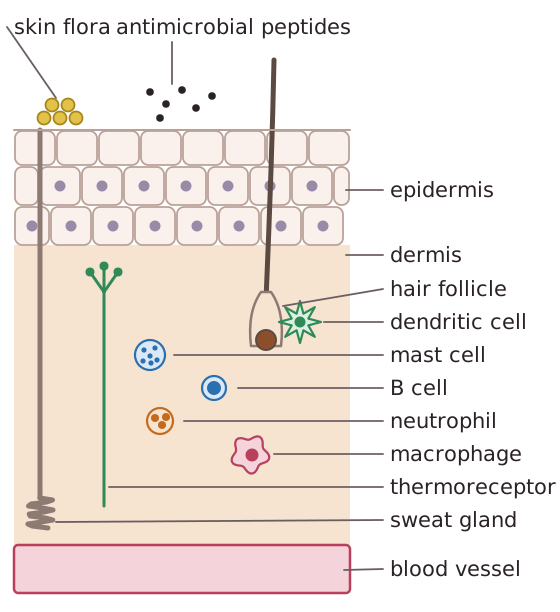
Thermoreceptors
Read the text
Read the text and highlight anything you think is important. When you go on, the text is hidden and you answer from memory.
Specification: OCR Biology A (H420), A-level, 5.1.1 Communication and homeostasis. Topic: Homeostasis.
Key terms in this lesson
- Neurone
- A specialised nerve cell adapted to transmit electrical impulses (nerve impulses) around the body.
More in Homeostasis
- Examples of Positive Feedback
- Endotherms and Ectotherms
- Behavioural Responses in Ectotherms
- Physiological Responses in Ectotherms
- The Hypothalamus
- Cooling
- Warming Up
- Excretion
All 33 lessons in Homeostasis · All OCR A-level Biology topics