 BRAINCAKE
Photosystems
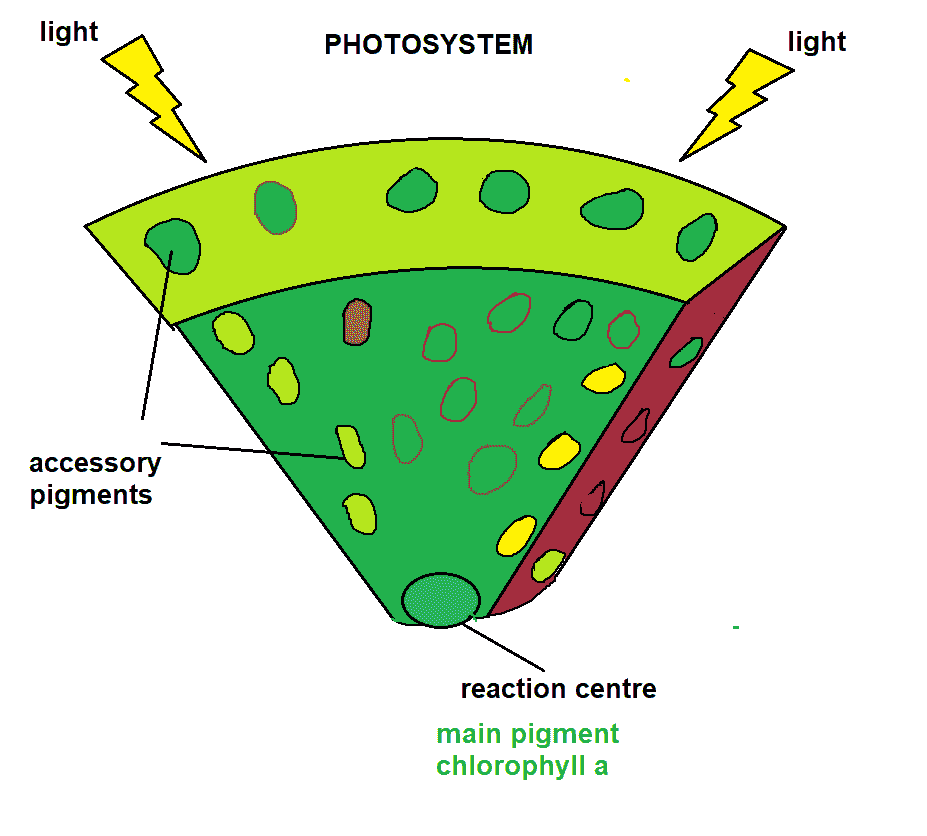
Photosynthetic pigments are arranged in light-harvesting clusters or photosystems in the thylakoid membrane. Several hundred accessory pigments capture light energy and channel the energy to a chlorophyll a molecule at the reaction centre of the photosystem.
Sign in free to see the rest of this lesson, the R.E.C.I.P.E. recall steps and the quiz
BrainCake is free. Make an account in seconds and pick up where this page stops.
Key terms in this lesson
- Thylakoid
- A flattened, membrane-bound disc within a chloroplast, stacked into grana, where the light-dependent reactions of photosynthesis occur.
- Chlorophyll
- The main photosynthetic pigment, which absorbs light energy, exciting electrons that are used in the light-dependent reactions.
More in Energy for Biological Processes
- ATP
- Chloroplasts
- Photosynthetic pigments
- Cyclic Photophosphorylation
- Non-cyclic Photophosphorylation
- Chemiosmosis
- Calvin Cycle
All 8 lessons in Energy for Biological Processes · All OCR A-level Biology topics