 BRAINCAKE
Limiting Factors of Photosynthesis
The rate of photosynthesis depends on several factors: light intensity, carbon dioxide concentration and temperature (water availability matters too, but water stress closes stomata before it limits the reactions directly).
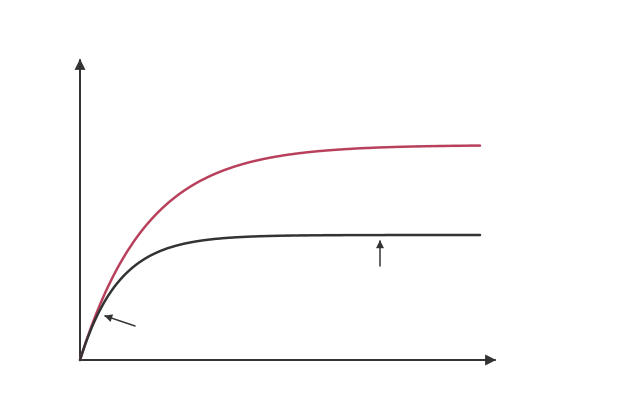
A limiting factor is the factor that is in shortest supply and so limits the rate of a process. If the level of the limiting factor is increased, the rate increases. Increasing any other factor has no effect until the limiting factor is raised.
Sign in free to see the rest of this lesson, the R.E.C.I.P.E. recall steps and the quiz
BrainCake is free. Make an account in seconds and pick up where this page stops.
More in Energy for Biological Processes
- Cyclic Photophosphorylation
- Non-cyclic Photophosphorylation
- Chemiosmosis
- Calvin Cycle
- Light Intensity as a Limiting Factor
- Carbon Dioxide Concentration as a Limiting Factor
- Temperature as a Limiting Factor
- Interpreting Limiting Factor Graphs
All 17 lessons in Energy for Biological Processes · All OCR A-level Biology topics