 BRAINCAKE
Investigating the Rate of Photosynthesis
The rate of photosynthesis can be investigated by measuring the rate of oxygen production by an aquatic plant such as Elodea or Cabomba. A simple method counts bubbles, but bubbles vary in size, so a photosynthometer (Audus apparatus) is more accurate.
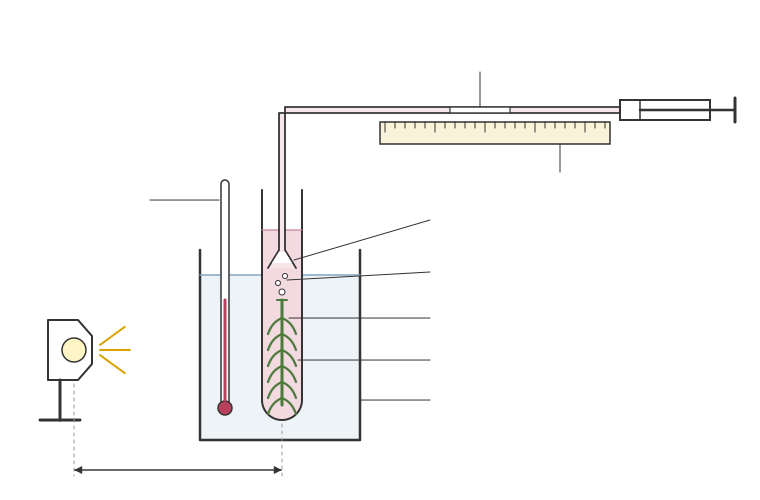
A cut shoot is placed upside down in a test tube of water containing sodium hydrogencarbonate solution, which supplies carbon dioxide. The tube stands in a water bath to keep the temperature constant. Oxygen collects in the flared end of a capillary tube. After a set time, the gas bubble is drawn along the capillary with a syringe and its length is measured against a scale.
Sign in free to see the rest of this lesson, the R.E.C.I.P.E. recall steps and the quiz
BrainCake is free. Make an account in seconds and pick up where this page stops.
Key terms in this lesson
- photosynthometer
- An apparatus used to measure the rate of photosynthesis in an aquatic plant from the volume of oxygen gas produced.
More in Energy for Biological Processes
- Limiting Factors of Photosynthesis
- Light Intensity as a Limiting Factor
- Carbon Dioxide Concentration as a Limiting Factor
- Temperature as a Limiting Factor
- Interpreting Limiting Factor Graphs
- Effect of Limiting Factors on the Calvin Cycle
- Uses of Triose Phosphate
- Agricultural Glasshouses and Limiting Factors
All 17 lessons in Energy for Biological Processes · All OCR A-level Biology topics