 BRAINCAKE
Effect of Limiting Factors on the Calvin Cycle
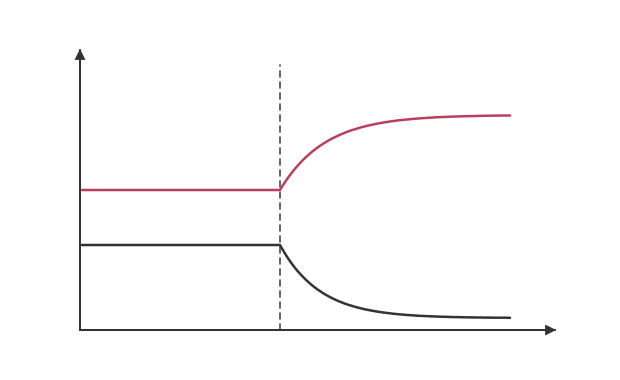
The levels of the three Calvin cycle intermediates, RuBP, GP and TP, change in predictable ways when a limiting factor changes. Use the cycle to work them out:
RuBP + CO2 → 2 GP → (ATP, reduced NADP) → TP → (ATP) → RuBP
Sign in free to see the rest of this lesson, the R.E.C.I.P.E. recall steps and the quiz
BrainCake is free. Make an account in seconds and pick up where this page stops.
Key terms in this lesson
- rubp
- A 5-carbon compound in the Calvin cycle that combines with carbon dioxide, catalysed by RuBisCO, to form two molecules of GP.
- gp
- A 3-carbon compound formed when RuBP combines with carbon dioxide in the Calvin cycle, later reduced to triose phosphate.
- tp
- The 3-carbon sugar phosphate formed by reduction of GP in the Calvin cycle, used to regenerate RuBP and to make organic molecules.
More in Energy for Biological Processes
- Limiting Factors of Photosynthesis
- Light Intensity as a Limiting Factor
- Carbon Dioxide Concentration as a Limiting Factor
- Temperature as a Limiting Factor
- Interpreting Limiting Factor Graphs
- Uses of Triose Phosphate
- Investigating the Rate of Photosynthesis
- Agricultural Glasshouses and Limiting Factors
All 17 lessons in Energy for Biological Processes · All OCR A-level Biology topics