 BRAINCAKE
Controlling Conditions in Fermenters
A fermenter (bioreactor) is a large vessel in which microorganisms are grown under controlled conditions, so that growth and product yield are as high as possible.
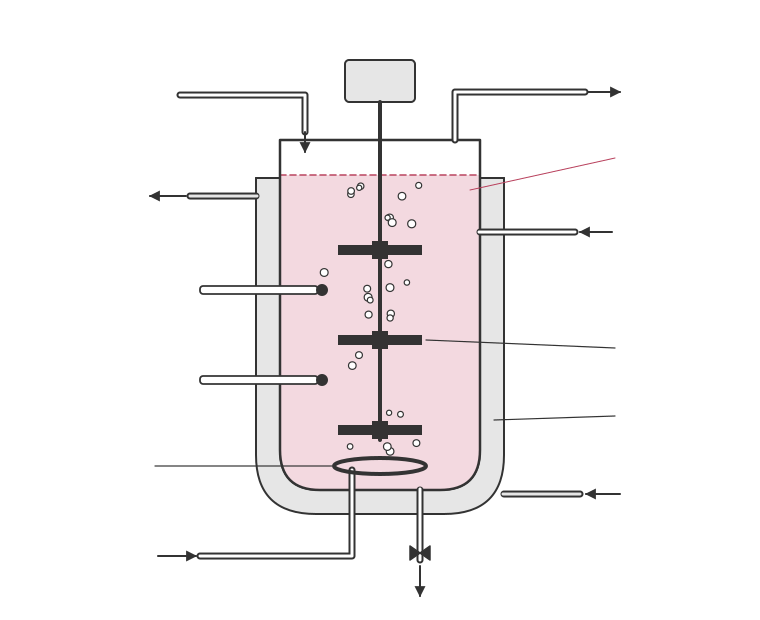
Conditions controlled
• Temperature: enzymes work best at an optimum. Too cold slows growth; too hot denatures enzymes. Respiring microorganisms release heat, so a water jacket with cold water circulating removes excess heat. A temperature probe monitors it.
• pH: enzymes have an optimum pH, and waste products (such as CO2 or acids) change the pH. A pH probe monitors it, and acid or alkali (or a buffer) is added to correct it.
Sign in free to see the rest of this lesson, the R.E.C.I.P.E. recall steps and the quiz
BrainCake is free. Make an account in seconds and pick up where this page stops.
More in Cloning and Biotechnology
- Culturing Microorganisms
- Aseptic Technique
- Serial Dilution
- Standard Growth Curve
- Batch Fermentation
- Continuous Fermentation
- Immobilised Enzymes
- Uses of Immobilised Enzymes
All 21 lessons in Cloning and Biotechnology · All OCR A-level Biology topics