 BRAINCAKE
The Calvin Cycle
The Calvin cycle is the series of enzyme-controlled reactions in the stroma that fixes carbon dioxide into carbohydrate.
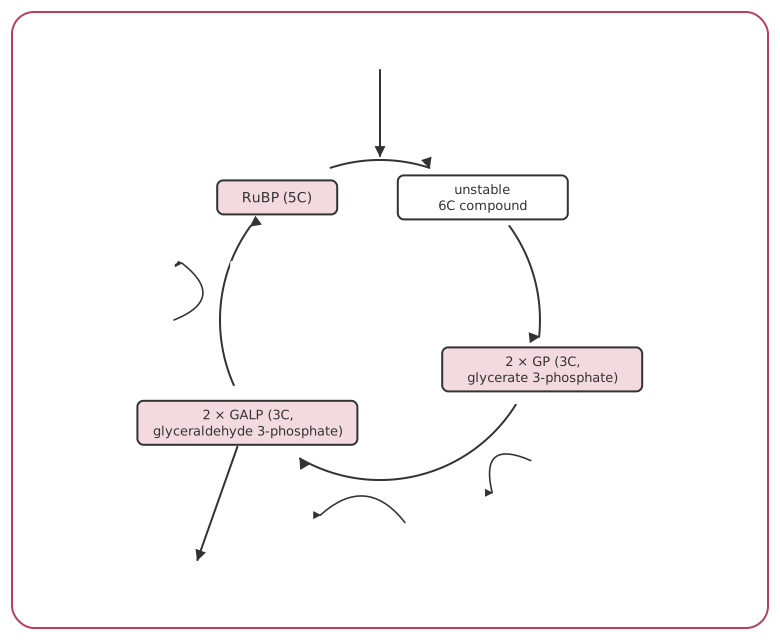
1. Carbon fixation: CO2 combines with ribulose bisphosphate (RuBP), a 5-carbon compound, catalysed by RUBISCO. The unstable 6-carbon product immediately splits into two molecules of glycerate 3-phosphate (GP), a 3-carbon compound.
2. Reduction: GP is reduced to glyceraldehyde 3-phosphate (GALP), a 3-carbon sugar phosphate (triose phosphate), using hydrogen from reduced NADP and energy from ATP. The NADP and ADP return to the thylakoids to be reused.
Sign in free to see the rest of this lesson, the R.E.C.I.P.E. recall steps and the quiz
BrainCake is free. Make an account in seconds and pick up where this page stops.
Key terms in this lesson
- nadp
- A coenzyme that acts as a hydrogen acceptor in the light-dependent reactions of photosynthesis, becoming reduced NADP when it accepts hydrogen.
- rubisco
- The enzyme that catalyses the fixation of carbon dioxide by combining it with RuBP in the Calvin cycle, and can also catalyse a competing reaction with oxygen (photorespiration).
More in Photosynthesis
- The Light-Dependent Reactions
- Cyclic Photophosphorylation
- Non-Cyclic Photophosphorylation
- The Light-Independent Stage
- The Products of Photosynthesis
- C4 Plants
- Rubisco
- Limiting Factors of Photosynthesis
All 20 lessons in Photosynthesis · All Edexcel A-level Biology topics