 BRAINCAKE
Chromatography
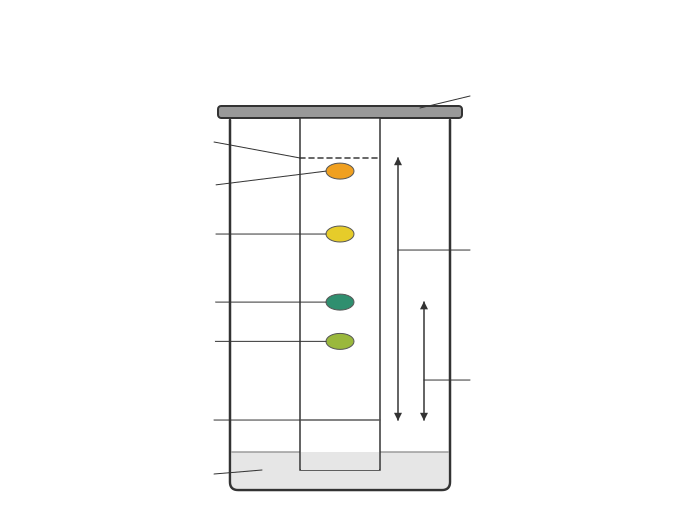
Photosynthetic pigments can be separated and identified by chromatography, using paper or a thin-layer chromatography (TLC) plate.
Method:
1. Grind a leaf with a little sand and a solvent such as propanone to extract the pigments.
2. Draw an origin line in pencil about 2 cm from the bottom of the paper or plate (ink would dissolve and run).
3. Using a capillary tube, add a small, concentrated spot of extract to the origin, letting it dry between applications.
4. Stand the paper in a container of running solvent with the solvent level below the origin line, and cover it so the air stays saturated with solvent vapour.
Sign in free to see the rest of this lesson, the R.E.C.I.P.E. recall steps and the quiz
BrainCake is free. Make an account in seconds and pick up where this page stops.
More in Photosynthesis
- The Process of Photosynthesis
- Chloroplasts
- Chlorophyll
- Absorption Spectrum Chlorophyll
- Photosystems
- The Light-Dependent Reactions
- Cyclic Photophosphorylation
- Non-Cyclic Photophosphorylation
All 20 lessons in Photosynthesis · All Edexcel A-level Biology topics