 BRAINCAKE
The Retina
The retina is the light-sensitive layer lining the back of the eye. It contains two types of photoreceptor, rods and cones, together with neurones that begin to process the visual information.
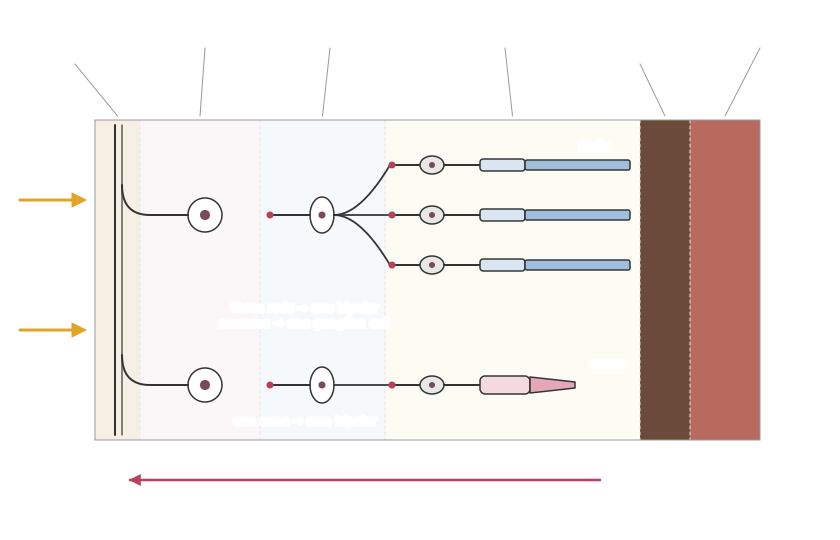
The retina has three main layers of cells:
• the photoreceptors (rods and cones), at the back, next to the pigmented layer
• bipolar neurones, which receive signals from the photoreceptors across synapses
• ganglion cells, which receive signals from the bipolar neurones. Their axons form the optic nerve
Sign in free to see the rest of this lesson, the R.E.C.I.P.E. recall steps and the quiz
BrainCake is free. Make an account in seconds and pick up where this page stops.
More in Mammalian Nervous System
All 38 lessons in Mammalian Nervous System · All Edexcel A-level Biology topics