 BRAINCAKE
Reflex Responses
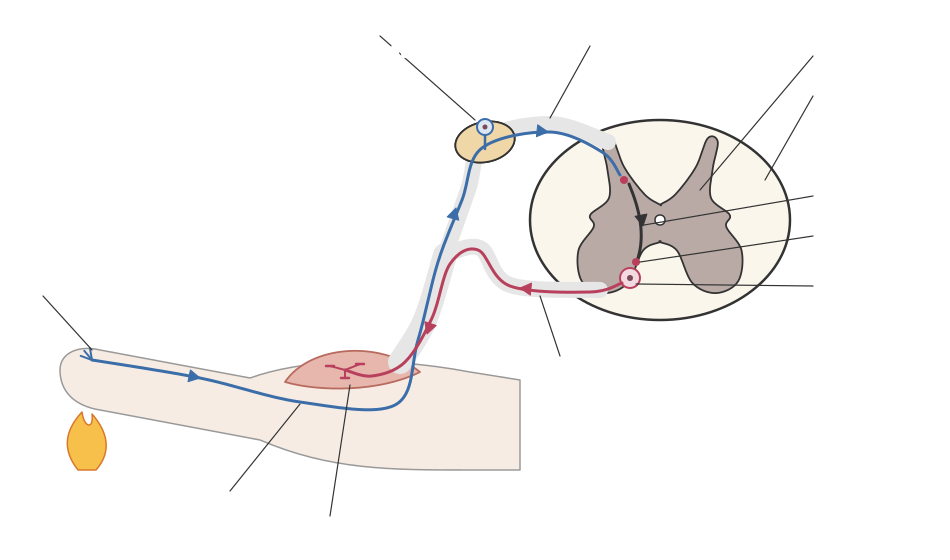
A reflex is a rapid, automatic (involuntary) response to a stimulus. The response is the same each time and does not need conscious thought. Reflexes protect the body from harm, for example pulling a hand away from a hot object, blinking when something touches the cornea, or the pupil narrowing in bright light.
The pathway of neurones in a reflex is the reflex arc:
stimulus → receptor → sensory neurone → relay neurone (in CNS) → motor neurone → effector → response
Sign in free to see the rest of this lesson, the R.E.C.I.P.E. recall steps and the quiz
BrainCake is free. Make an account in seconds and pick up where this page stops.
More in Mammalian Nervous System
- Formation of the Brain
- Major Areas of the Brain
- Other Areas of the Brain
- Spinal Cord
- Peripheral Nervous System
- Voluntary Nervous System
- Autonomic Nervous System
- Sympathetic Nervous System
All 38 lessons in Mammalian Nervous System · All Edexcel A-level Biology topics