 BRAINCAKE
Major Areas of the Brain
The human brain is part of the central nervous system (CNS). Three large regions are easy to identify on a side view of the brain: the cerebrum, the cerebellum and the medulla oblongata.
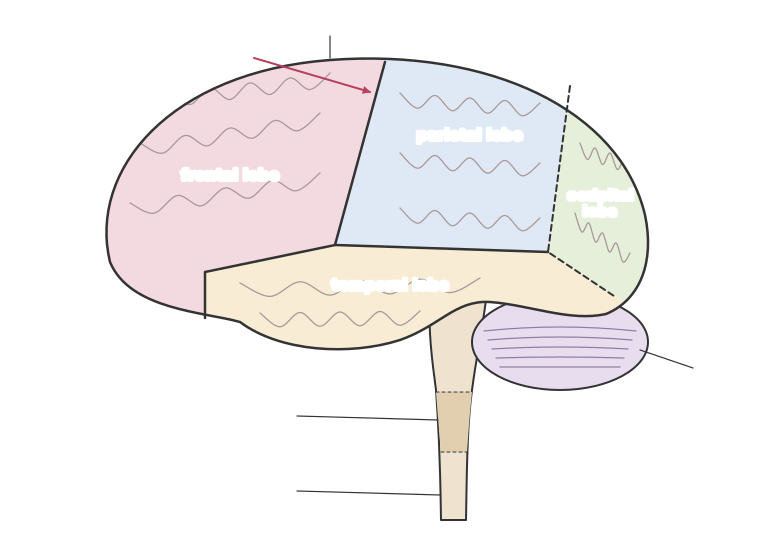
The cerebrum is the largest part of the brain. It is divided into left and right cerebral hemispheres, joined by a band of nerve fibres called the corpus callosum. Its thin, highly folded outer layer, the cerebral cortex, is grey matter made of neurone cell bodies. The folding gives a large surface area for a great many neurones. The cerebrum controls conscious activities: thought, language, reasoning, memory, interpreting sensory information and starting voluntary movement. Each hemisphere mainly controls the opposite side of the body.
Sign in free to see the rest of this lesson, the R.E.C.I.P.E. recall steps and the quiz
BrainCake is free. Make an account in seconds and pick up where this page stops.
More in Mammalian Nervous System
- Rods
- Cones
- Colour Vision
- Formation of the Brain
- Other Areas of the Brain
- Spinal Cord
- Reflex Responses
- Peripheral Nervous System
All 38 lessons in Mammalian Nervous System · All Edexcel A-level Biology topics