The postsynaptic membrane converts the chemical signal back into an electrical one. At a cholinergic synapse: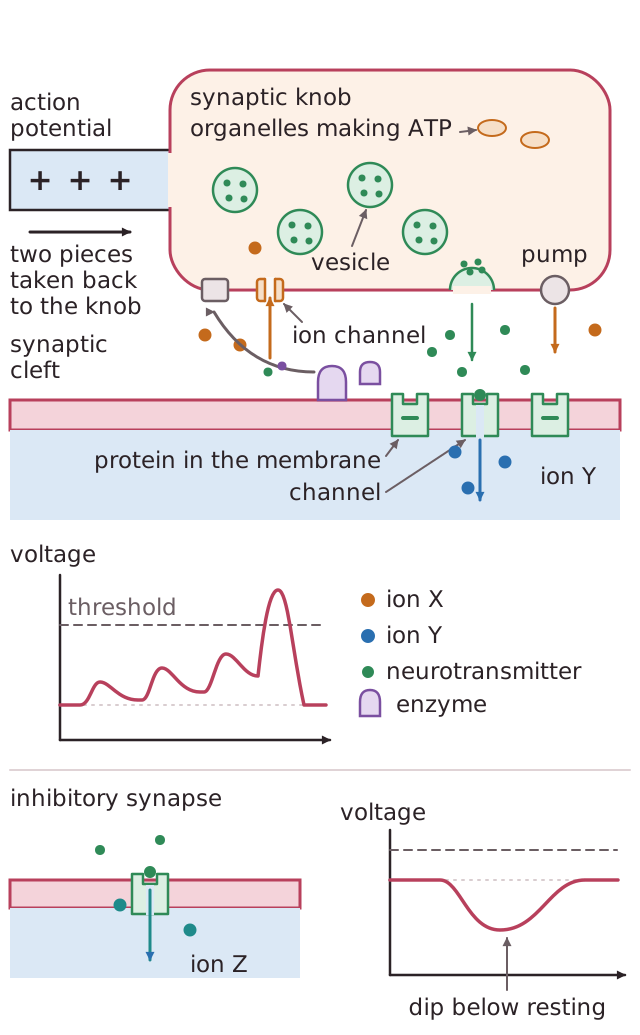 1. Acetylcholine (ACh) diffuses across the synaptic cleft.2. ACh binds to specific receptor proteins on the postsynaptic membrane. Its shape is complementary to their binding sites.3. Binding causes the receptor, which is a ligand-gated sodium ion channel, to change shape and open.4. Na+ diffuses into the postsynaptic neurone, depolarising the membrane. This is an excitatory postsynaptic potential (EPSP).5. If enough ACh binds and the EPSPs add together to reach threshold, voltage-gated Na+ channels open and an action potential is generated in the postsynaptic neurone.To stop the signal, ACh must be removed. The enzyme acetylcholinesterase, found on the postsynaptic membrane, hydrolyses ACh into choline and ethanoic acid (acetate). These diffuse back to the presynaptic knob to be recycled. This prevents continuous stimulation and lets the next impulse be transmitted as a separate signal.Not all synapses are excitatory. At an inhibitory synapse, a neurotransmitter such as GABA binds to receptors that open chloride ion (Cl−) channels or potassium ion channels. Cl− diffuses in or K+ diffuses out, so the postsynaptic membrane becomes hyperpolarised (an inhibitory postsynaptic potential). The membrane is further from threshold, so an action potential is less likely.A postsynaptic neurone may have thousands of synapses on it. Whether it fires depends on the balance of excitatory and inhibitory inputs arriving at the same time.