Animals respond to changes in their surroundings using two coordination systems: the nervous system and the endocrine (hormonal) system. The nervous system is fast, its effects are short-lived and it acts on specific target cells.The mammalian nervous system has two main parts:• the central nervous system (CNS): the brain and spinal cord
• the peripheral nervous system (PNS): all the neurones that connect the CNS to the rest of the bodyThe PNS is divided into the somatic nervous system, which controls voluntary actions such as moving skeletal muscles, and the autonomic nervous system, which controls involuntary actions such as heart rate and digestion. The autonomic system has two parts with opposing effects: the sympathetic system prepares the body for action (for example, it increases heart rate) and the parasympathetic system calms the body (for example, it decreases heart rate).Information travels through the nervous system as nerve impulses along neurones. A typical pathway is:stimulus → receptor → sensory neurone → CNS → motor neurone → effector → response Receptors detect stimuli, and effectors (muscles or glands) bring about responses. The CNS processes the information and coordinates the response. In a reflex arc, such as pulling a hand away from a hot object, the impulse passes through a relay neurone in the spinal cord without conscious thought, so the response is very fast.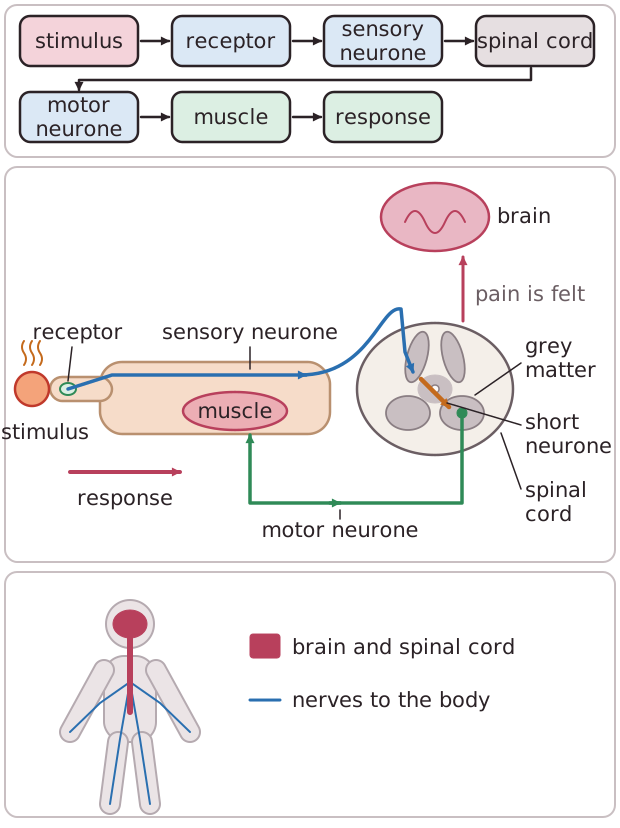 By contrast, hormones travel in the blood, act more slowly, can affect many tissues and often have longer-lasting effects.
• the peripheral nervous system (PNS): all the neurones that connect the CNS to the rest of the bodyThe PNS is divided into the somatic nervous system, which controls voluntary actions such as moving skeletal muscles, and the autonomic nervous system, which controls involuntary actions such as heart rate and digestion. The autonomic system has two parts with opposing effects: the sympathetic system prepares the body for action (for example, it increases heart rate) and the parasympathetic system calms the body (for example, it decreases heart rate).Information travels through the nervous system as nerve impulses along neurones. A typical pathway is:
By contrast, hormones travel in the blood, act more slowly, can affect many tissues and often have longer-lasting effects.