 BRAINCAKE
Action Potential
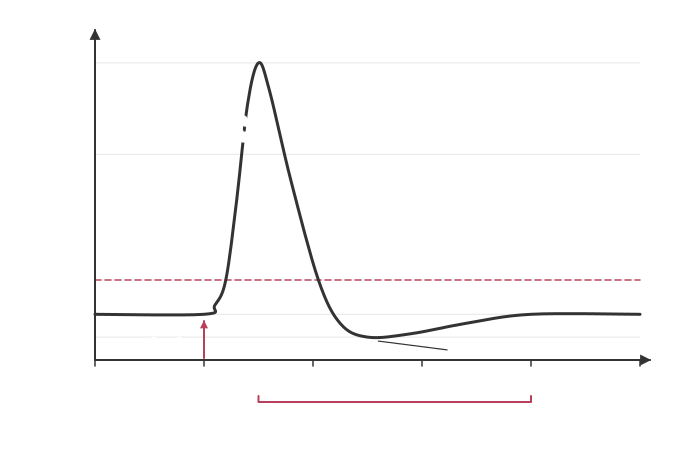
An action potential is a brief reversal of the potential difference across the membrane of a neurone, from about −70 mV (inside negative) to about +40 mV (inside positive). It lasts about 2 to 3 ms and is caused by the opening and closing of voltage-gated ion channels.
The sequence of events is shown on a graph of membrane potential against time:
Sign in free to see the rest of this lesson, the R.E.C.I.P.E. recall steps and the quiz
BrainCake is free. Make an account in seconds and pick up where this page stops.
More in Mammalian Nervous System
- Myelinated Neurones
- Speed of Nerve Impulses
- Investigating Nerve Impulses
- Resting Potential
- Depolarisation
- Repolarisation
- Hyperpolarisation
- Refractory Period
All 38 lessons in Mammalian Nervous System · All Edexcel A-level Biology topics