 BRAINCAKE
Structure and Function of Neurones
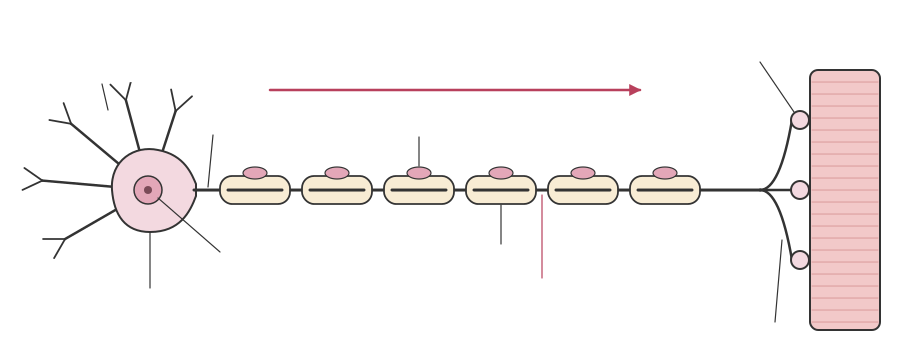
A neurone is a nerve cell specialised to carry electrical impulses. Every neurone has a cell body containing the nucleus, many mitochondria and a lot of rough endoplasmic reticulum for making proteins such as the enzymes that make neurotransmitters. Thin extensions carry the impulses: dendrites carry impulses towards the cell body and the axon carries impulses away from it.
There are three types of neurone.
Motor neurones carry impulses from the CNS to effectors. The cell body is in the CNS and has many dendrites. A single long axon ends in axon terminals with synaptic knobs on a muscle or gland.
Sign in free to see the rest of this lesson, the R.E.C.I.P.E. recall steps and the quiz
BrainCake is free. Make an account in seconds and pick up where this page stops.
Key terms in this lesson
- myelin sheath
- An insulating layer of Schwann cell membrane wrapped around an axon that speeds up nerve impulse conduction.
- axon
- A long, thin extension of a neurone that carries nerve impulses away from the cell body.
More in Mammalian Nervous System
- Nervous System
- Nerve Impulses
- Myelinated Neurones
- Speed of Nerve Impulses
- Investigating Nerve Impulses
- Resting Potential
- Action Potential
- Depolarisation
All 38 lessons in Mammalian Nervous System · All Edexcel A-level Biology topics